The Hidden Engine Behind Memorable Staging
Not only the sofa you pick or how light hits a linen throw—great staging is about how swiftly and gracefully you can transform a place. Equipment on the truck determines whether a staging day is choreography or a slog. Furniture moving dollies are unsung heroes, turning cumbersome items into easy-to-place design accents AND keeping floors clean and teams fresh.
That subtle upgrade—rolling, not dragging—opens time for the work that sells homes: flow, balance, and the kind of detail that makes buyers feel like they’ve already moved in. When your tools do the heavy lifting, your talent can take center stage.
Momentum Beats Muscle
Real estate is time-based. The property isn’t photo-ready for every hour spent wrestling a buffet or pushing a sofa across hardwood. Dollies alter maths. A person can move a dining table, video console, or tall bookcase across the room in seconds without grunting.
If you multiply those moments across a full stage, the time savings are huge. Faster setups imply earlier photo sessions, faster listings, and more pipeline projects. The cherry? Design judgements are sharpened by speed without effort. Moving day doesn’t sap your energy, so your composition and styling improve.
Damage Control Starts With Your Wheels
Furniture is merchandise, flooring are your client’s investment, and wall corners nag sloppy motions. Non-marking rubber or polyurethane wheels do not scuff, and low-profile platforms balance weight so legs don’t bite into wood or tile. The difference between a smooth exit and a repair bill with your name on it.
A single scrape on newly refinished hardwood can stall a listing and erase profit from multiple jobs. With smart gear—soft wheels, secure platforms, and solid strapping—damage stops being part of the story. Your reputation stays glossy, and your numbers do, too.
Presence, Poise, and the Gear That Signals Both
Clients notice everything—how you arrive, how you set up, the way your team moves through a doorway. Rolling in with commercial-grade dollies telegraphs professionalism before the first vignette is placed. It says: we’re prepared, we’re efficient, and nothing here gets dinged on our watch.
That confidence is contagious. Agents relax. Sellers feel protected. Referrals grow from what they see and how easy you make it look. Staging is theater; your equipment is part of the set.
Choosing Dollies Like a Pro
Not all dollies are created equal, and bargain-bin gear will betray you at the worst moment. Look for the kind of build meant for repeat, real-world work.
- Weight capacity: Choose platforms and hand trucks rated to comfortably exceed your heaviest pieces.
- Wheel quality: Non-marking rubber or polyurethane, with smooth bearings and sufficient diameter for thresholds.
- Platform design: Low-profile, wide enough for furniture bases, with carpeted or non-slip surfaces that hug and protect.
- Durability: Hardwood or steel frames with reinforced corners; casters that don’t wobble under load.
- Maneuverability: Swivel casters for tight turns, optional locking wheels for precise placement, responsive steering.
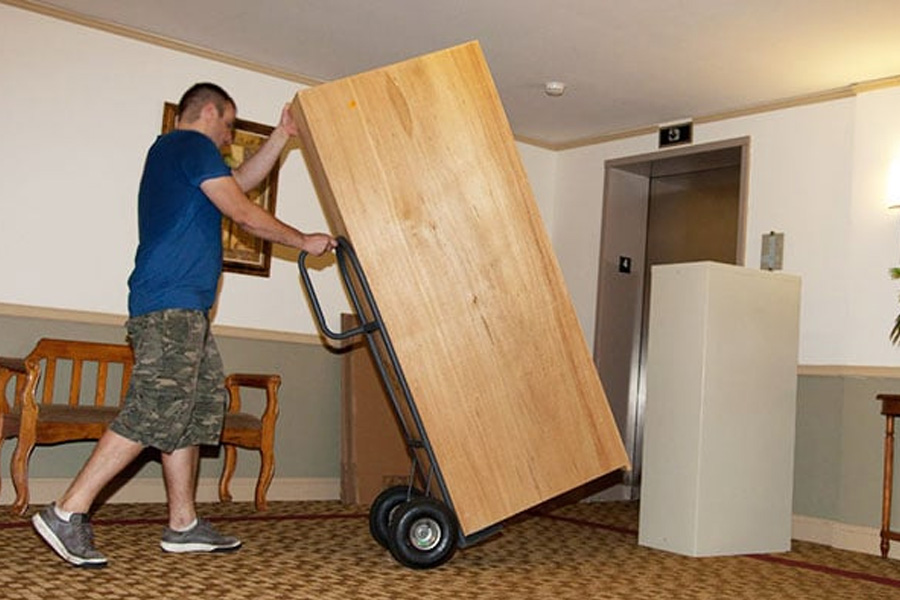
For tall or delicate pieces, a tilt-back hand truck with straps is your best friend. For stairs, tri-wheel stair-climbing dollies or powered units reduce risk. And don’t overlook the supporting cast: moving blankets, corner guards, ram board or runners for floor protection, doorjamb shields, and a good J-bar to lift legs onto the platform without strain.
Health, Safety, and Longevity for Your Crew
Staging careers are marathons, not sprints. Poor technique and bad gear add up to sore backs and shortened careers. Good dollies act like an exoskeleton: they keep loads low and stable, encourage proper posture, and cut repetition of risky lifts.
A team that finishes the day unbeat has the energy to finesse the final 10%—the plant angle, the pillow chop, the sightline. Smart gear protects bodies today and keeps a seasoned crew together tomorrow.
Numbers You Can Feel in Your Schedule and Ledger
When you glide instead of pulling, your calendar and margins expand. Faster turnarounds mean more staged homes per week, and fewer damages mean less repair and replacement costs. Momentum helps staging—photos make the listing fly. Every day of prep cut reduces time to market and raises sale pricing.
The data-backed truth is simple: effective staging moves homes. Efficiency amplifies that effect. Dollies turn logistics into leverage.
Field-Tested Moves: How Teams Deploy Dollies on Site
Install floor protection in high-traffic areas and corner guards on tight hallway turns upon arrival. Pre-strap tall parts on a tilt-back hand truck and clear their arc to prevent pinballing. For large furniture, use carpeted platforms with two swivel casters in front and two fixed in rear for smooth pivots and confident lines.
Designers specify placements, handlers set the load, lock casters, and adjust angle with little rolls rather than micro-lifts. Stair jobs have their own rhythm: a stair-climbing dolly or two-person hump strap with frequent breaks, calm communication, and a spotter watching the piece and path. Everything reads like a calm ballet with crisp motions.
FAQ
Which dolly is best for living room furniture?
A low-profile, carpeted furniture dolly with non-marking swivel casters handles sofas, consoles, and coffee tables beautifully.
Will rubber or polyurethane wheels mark hardwood floors?
Quality non-marking wheels won’t leave scuffs when clean and used over protected pathways.
Do I need more than one type of dolly?
Yes; a platform dolly for wide pieces and a tilt-back hand truck for tall or heavy items cover most staging needs.
How much weight should my dolly be rated for?
Choose equipment rated above your heaviest expected load so you’re never operating at the limit.
What’s the best way to move furniture up stairs?
Use a stair-climbing dolly or a two-person strap technique with a spotter and frequent rests.
Are dollies safe for vintage or delicate pieces?
They are when paired with blankets, straps, and a non-slip platform that keeps pressure distributed and gentle.
How do I prevent wall and corner damage while rolling?
Install corner guards and doorjamb protectors, plan your paths, and pivot with space, not speed.
Do dollies really save time on small jobs?
Even in a single-room stage, dollies cut minutes from each move and conserve energy for styling.