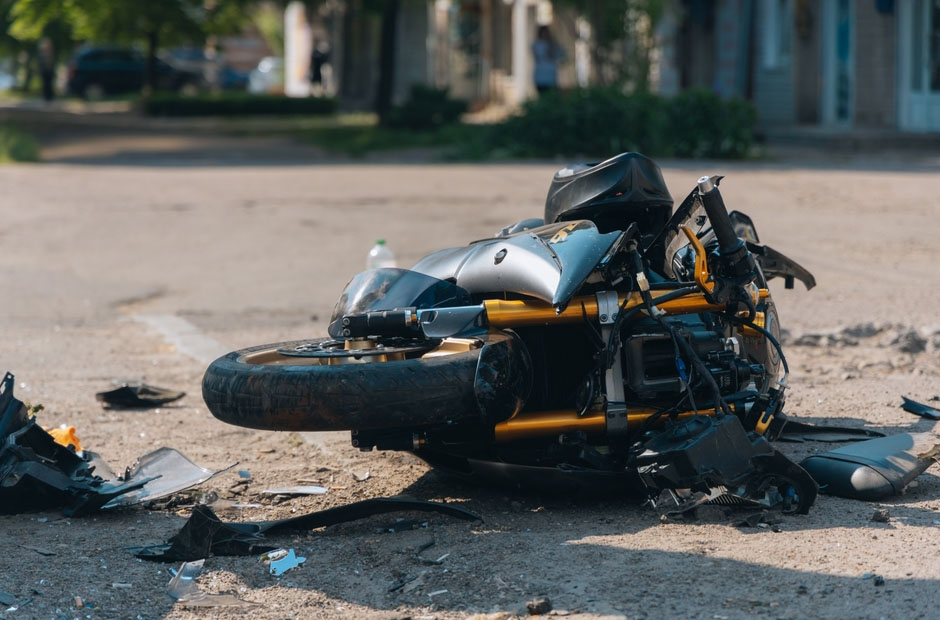
According to the National Safety Council, in motorcycle accidents, there were 6,335 fatalities in 2023. This statistic confirms motorcycle accidents remain frequent in the United States.
The motorcycle deaths per year might often indicate the overall safety of the roads, the extent of compliance with the rules by the riders, and the effectiveness of the measures taken in the areas of public safety and traffic management for both drivers and police.
Motorcycle accidents usually occur for the same reasons. With several drivers unaware of what causes the dangers on the road, they are always at risk of getting in an accident. As a result, they also face several consequences of its aftermath.
To understand these dangers, let’s discuss in greater detail the factors that are most commonly associated with motorcycle accidents.
Distracted Drivers
Have you ever observed how quickly and easily a driver can lose their concentration? For a very brief period, they might be aware of what is going on around them, but in no time, they might be led to engage in such activities as scrolling through their phones or conversing with a person nearby.
A momentary lapse in concentration can be fatal for a motorcyclist. A driver losing his/her attention could be the reason for a pedestrian getting knocked down. A distracted driver might change his/her lane or stop suddenly. The ability of the driver to see clearly is the most important aspect in determining his/her safety and risk awareness. One must always drive with caution. Monitor other traffic participants and be alert to potential hazards all the time.
Speeding
According to Albuquerque motorcycle accident lawyer Kristina Martinez, speeding is the cause of serious crashes. Motorcycles are known for their ability to accelerate very fast; this is one of the few advantages that motorcycles provide. Still, it is also a factor that decreases the chances of riders getting the right answer in the case of an accident.
A fast rider is likely to misinterpret the scenario and fail to prevent the impending calamity. A motorcyclist might be speeding and suddenly lose control. This situation is a common occurrence on worn-out road sections or sharp turns.
Lane Splitting
Splitting the lanes is a practice that might look like a faster way to skip the traffic jams. In actuality, this practice is hazardous for other cars moving at a higher speed than you.
There are states that permit lane splitting. Still, it is imperative to be conscious of it possible repercussions.
Be observant and well-equipped for the potential movements that vehicles may make while you are lane splitting.
Poor Road Conditions
Badly maintained and uneven roads represent a significant danger to cyclists and bring about accidents that are nearly impossible to predict. Unexpected holes, huge stones, and bumpy roads, together with the like, can make your bicycle wheel shake as if it were trying to keep balance on ice while dancing slowly.
With wet roads and freezing conditions, traction drops drastically, which comes to equal more skids. Whether the debris is in the form of tree branches or errant quarry rock, it can still cause your wheel to wobble.
Always keep a clear path in mind; if the current road looks poorly maintained, opt for another route.
Keeping abreast of changes to road conditions is important when riding through unfavorable roads. Being vigilant and developing assertions in connection with the road is how to offset the risks of poor road conditions.
Inexperienced Riders
Newbie bikers usually ignore the many aspects of cycling that could raise their risk while riding the road. An inexperienced cyclist might consider some surfaces to be hard to handle or much different from the place where he/she had practiced riding.
Managing turns and brake systems and handling traffic are decisions to be made rapidly with skill. Lack of experience can cause you to misidentify hazards or incorrectly assess distances, increasing your risk of being in an accident.
You may focus on your safety when riding in a group, but that may also bring you the pressure of keeping up with others. Skillful progress, defensive driving practice, and wearing safety equipment can drastically reduce the risk of accidents.
Weather Conditions
One of the main factors contributing to the safety of motorcycles is understanding how weather conditions affect them. A tiny bit of rain shower can make a motorcycle rider’s driving situation significantly different. The slippery roads might lead to the loss of grip of the wheels, and hence unexpected slips or rough turns may occur.
Delivering strong winds might cause a sudden change in the weight placement, and thus a rider might go off balance or off the intended course. The fog reducing the visibility can make it very hard to see another vehicle or an obstacle.
The riding practices have to be adjusted to the weather condition that is less than perfect. Be careful and slow down. Maintain long following distances and be prepared for increasing challenges. It is recommended to check the forecasts every day before going away for your journey; in the event of a bad weather forecast, the best option would be to delay the ride.
The presence of such safety measures will not only increase the confidence of the road users but also allow them to travel with less worry in mind.
Lack of Protective Gear
In case of an accident, the damage that could have been done will be very severe if no safety gear was used at all.
A full-face helmet, gloves, an armored jacket, and heavy-duty boots are the investments that can provide you with the best protection and safety measures. Even minor accidents could result in major injuries like severe road rash, fractures, and even more serious injuries in case of a crash if these are not used.
While all safety gear offers comparable protection, helmets tend to be one of the most underrated items. Adhering to regulations and reducing the likelihood of injury are not the only benefits of using safety gear.