Opening Scene: A Continent of Waterways, Rethinking the Old Playbook
South America’s prosperity has always followed water, from the Amazon’s braided arteries to the Atlantic and Pacific estuaries. Ports, rivers, and cities need depth, flow, and flood protection. Dredging carried huge loads—often bluntly—for decades. A quieter revolution is unfolding today. To keep channels open and species safe, engineers, ecologists, and crane operators are upgrading the craft’s equipment and techniques. Think accuracy over power, openness over guesswork, and environments as stakeholders, not collateral.
Why Yesterday’s Dredging Left Scars
The old approach prized volume: scoop fast, move on. Sediments were stirred up indiscriminately, turbidity spiked, and contaminants locked in mud sometimes slipped into the water column. Mangroves lost anchors, eelgrass smothered, fish spawning grounds scrambled. In rivers like the Magdalena and the Paraná, uncalibrated cuts reshaped flows and nibbled at banks, sometimes triggering erosion downstream. The lesson landed hard—depth without design can be expensive, ecologically and economically.
The Gear That Changed the Game
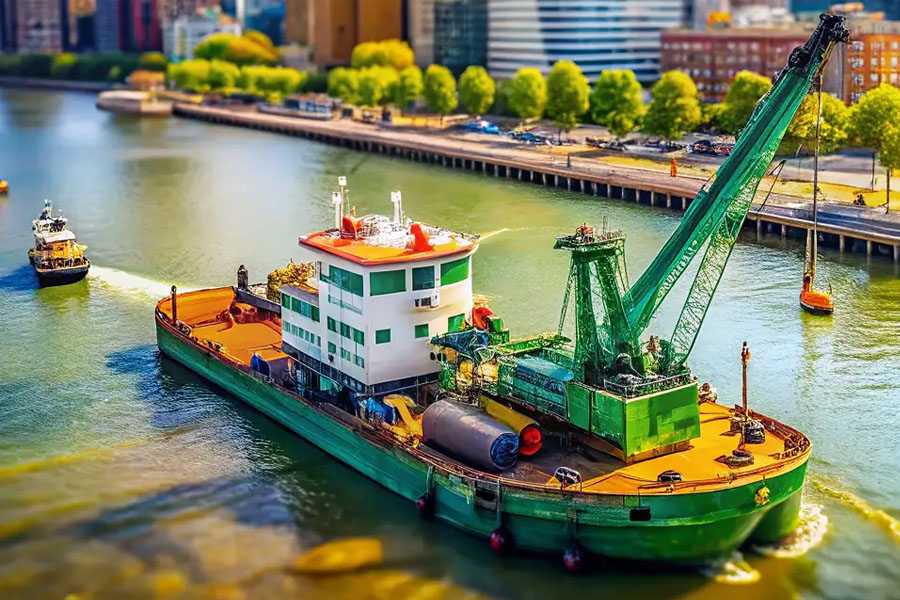
A modern dredging deck feels more like a cockpit than a building site. GPS and GIS guide buckets and suction heads within millimetres. Operators can reduce pumps or pause when turbidity, dissolved oxygen, and noise sensors surpass criteria in real time. Engines are optimised for fewer emissions, and hybrid and hydraulic systems maximise fuel efficiency. Closed-loop systems move polluted sediment through pipes and hoppers without fines, while eco-dredgers have shrouds and skirts to control plume dispersion. No sweeping mood, just surgical.
Techniques That Keep Nature in Play
The toolset includes tech, timing, sequencing, and restraint. Crews avoid peak spawning and migration by working in “fish windows.” Silt and turbidity curtains trap suspended particles. Variable-speed suction reduces shear stress, and precision excavation avoids sensitive substrates. Small-footprint vessels reduce wake and prop wash in shallow lagoons; phased dredging stabilises water quality and navigation in busy estuaries. After the dig, clean dredging material becomes live shorelines, restored wetlands, and bird-friendly islands that cushion storm surge and repair habitat.
Field Notes from River to Coast
South America’s diversity keeps engineers nimble. In the Amazon delta, the choreography leans toward sediment management and community visibility—big systems, big stakes, and a lot of eyes. Along the Atlantic ports of Brazil, digital twins—virtual models of the harbor and its ecology—let teams test a dredge plan before the first bucket drops, probing how currents, tides, and turbidity might respond. In the Río de la Plata, operators blend high-precision channel cuts with riverbank stabilization so the river keeps its shape after the machinery leaves. Up in Pacific estuaries, the emphasis is often on low-noise methods to protect marine mammals, plus careful staging to reduce plume-making in tight, biodiverse waters.
Ecological Balance Isn’t a Slogan—It’s a Process
Sustainability in dredging requires check-ins throughout time. Baseline studies map pollutants and habitats. Environmental impact evaluations set boundaries. When the river responds, adaptive management lets crews and regulators adjust. Habitat compensation and restoration are funded upfront. Success is judged by oxygen levels, fish populations, shorelines, and community benefits beyond shipping schedules, not only cubic meters removed.
Policy Momentum and On-The-Ground Compliance
Regulation is catching up to the practice. Environmental licenses require mitigation plans and monitoring protocols. Sediment testing is routine, and many projects now publish simplified dashboards so neighbors can track turbidity and timelines without decoding a lab report. On the water, satellite transponders and geo-fenced dredge zones keep fleets honest, while inspectors and third-party auditors add teeth. Regional coordination is uphill—every country’s rules read a bit differently—but the drift is clear: dredging earns its permit by proving it can keep water quality, habitats, and livelihoods in the frame.
Dollars, Skills, and Adaptation: The Practical Hurdles
Modern equipment is expensive, and not all port authorities can afford it. Green bonds, public–private partnerships, and climate-aligned financing that encourage lower emissions and verifiable ecological effects distribute costs. Operators and scientists must be skilled. Training programs are expanding to teach personnel how to steer by sensors, assess data, and troubleshoot live. The fit problem: a procedure that works in a breezy Atlantic bay may fail in a slow, sediment-heavy river. Local adaptation—prototyping, iterating, listening—distinguishes notion from craft.
What Success Looks Like on the Water
The proof unfolds in quiet markers. Channels stay at design depth longer. Turbidity peaks flatten out, and recovery times shrink. Replanted mangroves take root, marsh grasses hold, and bird counts tick upward on newly formed islets. Communities report fewer fishery interruptions, and emergency flood dredges become rarer because routine maintenance is smarter. Operators talk less about excavation rates and more about windows, thresholds, and reuse volumes, a lexicon shift that signals the culture change underneath.
FAQ
What is sustainable dredging?
Sustainable dredging balances navigation and flood safety with water quality, habitat protection, and community needs, using precise equipment and adaptive management.
How do turbidity curtains actually help?
They act like underwater fences, trapping fine sediments so plumes don’t spread and water quality rebounds faster.
Are eco-dredgers slower than traditional machines?
They can be, but precision and reduced rework often mean the overall schedule stays competitive or improves.
What happens to the sediment once it’s removed?
Clean materials are frequently reused to build or restore wetlands and shorelines, while contaminated sediments are contained and disposed of safely.
Can dredging protect biodiversity?
Yes, by timing work outside breeding seasons, minimizing noise and plumes, and restoring habitats with the material that’s moved.
Why is real-time monitoring a big deal?
Live data lets crews adjust on the spot, preventing threshold breaches instead of reacting after damage is done.
Does sustainable dredging cost more?
Upfront costs can rise, but savings from fewer impacts, less rework, and long-term resilience often level the ledger.
How do communities stay involved?
Many projects share monitoring data publicly and add local oversight committees so feedback guides decisions as the work unfolds.
What’s a closed-loop dredging system?
It’s a setup that captures and transports sediment within sealed pathways, keeping contaminants from leaking into surrounding waters.
How is success measured?
By meeting depth targets while holding water quality and habitat metrics steady or improving, with transparent data to back it up.