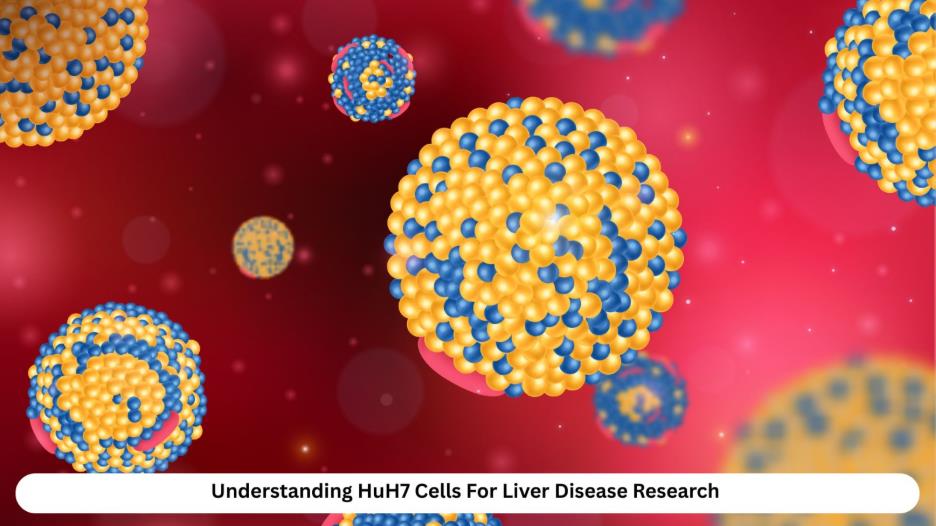
If you work in liver disease research, you have probably encountered a common problem, which is the difficulty in identifying good cellular models that actually recapitulate human liver biology in vitro.
Primary human hepatocytes may be regarded as a gold standard, but they are associated with limitations such as a short life cycle, variability of donors, and being costly. Conversely, the disease context and viral susceptibility you might require are not available in traditional liver-derived models. It is at that point that HuH7 cells become a compelling alternative to many researchers.
Such cells offer a stable platform that fills the gaps between fundamental science and the practical tasks of liver disease. This article will discuss why these cells are so useful, how they have contributed to research on liver diseases, and why they are currently extensively used in research on viral hepatitis, as well as cancer mechanisms.
What HuH7 Cells Are and Why They Matter
HuH7 cells are essentially immortalized cancer cells of the human liver originally obtained by growing a hepatocellular carcinoma tumor in a 57-year-old Japanese man. Since they are human hepatic tissue derivatives and can be further cultivated in culture indefinitely, they provide a convenient and reproducible model for in vitro studies.
These cells have epithelial-like morphology and attach to culture surfaces, which allows their regular growth and experimentation. Their unique characteristic in liver research is that they are permissive to hepatotropic viruses such as the hepatitis C virus (HCV), a feature that revolutionized anti-viral research by allowing viral replication studies to be conducted in the laboratory.
Rather than having to perform experiments with primary hepatocytes, which quickly become inactive, scientists can use HuH7 cells to examine disease pathogenesis and test therapeutic candidates in more controlled and consistent settings.
A Window into Viral Liver Diseases and Hepatitis
HuH7 cells have been used in one of the most significant applications in hepatitis virus research, especially HCV. Prior to the availability of this cell line, culturing HCV in the laboratory was very challenging, significantly limiting.
Since these cells are able to sustain the entire viral life cycle- entry, replication, and release- they enable researchers to study viral behavior and screen anti-viral agents. This potential has seen the creation of direct-acting anti-virals and the enhancement of knowledge about the pathogenesis of viral hepatitis.
In addition to HCV, HuH7 cells have also been used to study other liver-targeting viruses, including hepatitis B virus (HBV) and other flaviviruses, albeit to varying degrees. Their expression of important host factors promotes viral entry and replication and assists researchers in studying host-pathogen interactions and finding possible anti-viral targets.
Investigating Liver Cancer Biology

HuH7 cells are an excellent model to study the mechanisms of liver cancer because they are a cell line derived from hepatocellular carcinoma (HCC). They are used by the researchers to break down pathways in tumor growth, survival, and metastasis.
For example, changes in signaling axes, such as PI3K/AKT or Wnt/b-catenin, which occur frequently in HCC, can be analyzed within this cellular context to identify therapeutic vulnerabilities.
Moreover, xenograft models can be created with HuH7 cells by implanting tumor cells into an animal. Through integration of in vitro and in vivo studies, researchers are able to have a better understanding of biology and the response to the treatment of cancer.
Understanding of Metabolism and Drug Toxicity
Despite their cancerous origin, HuH7 cells retain several liver-like metabolic functions, including the synthesis of albumin and certain metabolic enzyme activities. This makes them useful for research into drug metabolism and toxicity, important areas when assessing new therapies.
Their capacity to process lipids and respond to metabolic stress has also been exploited to investigate conditions like steatotic liver disease and drug-induced liver injury. However, it’s essential to recognize that their metabolic profile differs from that of healthy hepatocytes; for example, some drug-processing enzymes may be expressed at lower levels.
Therefore, data from HuH7 models should be interpreted with context and, when appropriate, supplemented with additional systems to validate findings.
Strengths and Considerations for Research Planning

When planning experiments, it’s helpful to balance the strengths and limitations of HuH7 cells. Their major advantages include easy culturing, reproducible behavior, and suitability for high-throughput screening and genetic manipulation.
These traits make them accessible for a wide range of labs and experimental designs. Yet, because they are cancer-derived and genetically altered, they don’t perfectly mimic normal hepatocyte physiology.
Genetic drift and changes over long culture periods can also affect experimental outcomes, so routine authentication and quality control are essential to maintain reliability. Despite these considerations, the robust use of HuH7 cells in thousands of studies worldwide underscores their value as a foundational model in liver research.
Bringing it All Together
Understanding HuH7 cells and their role in liver disease research empowers you to design experiments with clarity and confidence.
These cells have become indispensable because they combine human-derived biology with the practicality of continuous culture, making them effective for investigating viral hepatitis, liver cancer, metabolism, and drug responses.
Their ability to support viral replication and reflect aspects of liver function provides a window into complex disease processes that would otherwise be difficult to model in vitro.
While no model is perfect, knowing how to leverage the strengths of HuH7 cells, while accounting for their limitations, can drive more informative, impactful research outcomes.
Whether you’re exploring mechanisms of disease or screening new therapies, this cell line remains a versatile and trusted tool in the modern liver research toolkit.