Small homes fail for one simple reason. The layout is fixed. The walls are empty. Furniture ends up doing all the work. That never works well. Furniture fills space. Walls define space. The fastest way to control how a room feels is through vertical design choices. One of the easiest upgrades is installing green wallpaper. It changes depth, mood, and lighting perception at the same time. You are not decorating anymore. You are shaping how the room is experienced.
Many people believe square footage determines comfort. It does not. Visual flow determines comfort. A 40 m² apartment can feel calm and intentional. A 120 m² house can feel chaotic.
The difference is planning.
The First Rule: Stop Decorating Every Wall
Beginners treat walls like blank canvases. They try to fill all of them. That approach shrinks a room instantly.
Empty space is not wasted space. Empty space is breathing room.
Pick one wall per room to carry the design weight. Let the other walls support it.
Why this works:
- Your eyes need a resting place
- Contrast creates hierarchy
- The brain understands structure faster
Without hierarchy, a room feels cluttered even when it is clean.
Anchor Walls Create Depth
An anchor wall is the visual center of a room. Everything else orbits around it.
Examples:
- Behind a sofa
- Behind a bed
- At the end of a hallway
- Opposite the main entrance
A strong anchor wall tricks your brain into perceiving distance. Pattern and color create perspective cues. The room suddenly feels longer.
Depth is more important than size.
The Color Problem in Small Homes
Many apartments default to plain white walls. People think white makes rooms bigger. That is only half true.
White walls reflect light evenly. Even reflection removes shadow. Removing shadow removes depth. Removing depth makes the room feel flat.
Flat rooms feel smaller.
Color fixes this by creating soft shadow transitions. Green is especially effective because it is balanced between warm and cool tones.
Light bounces differently off a tinted wall. Edges become visible. Corners gain dimension.
Ceiling Height Illusion (A Powerful Trick)
Low ceilings are common in apartments. Most people ignore them. Designers do not.
You can visually raise a ceiling without construction.
Use vertical pattern direction.
What to do:
- Choose vertical botanical prints
- Avoid horizontal stripes
- Keep baseboards light colored
Vertical lines pull the eye upward. The brain follows line direction automatically.
Your eyes determine perceived height more than actual height.
Add a tall floor lamp near the anchor wall. Light hitting a vertical pattern increases the effect.
Furniture Placement Mistakes
Small homes suffer from one repeating issue: furniture pushed against every wall.
People think this creates space in the middle. It actually does the opposite.
When furniture hugs the perimeter, the eye notices the room boundaries immediately. The room feels boxed in.
Instead:
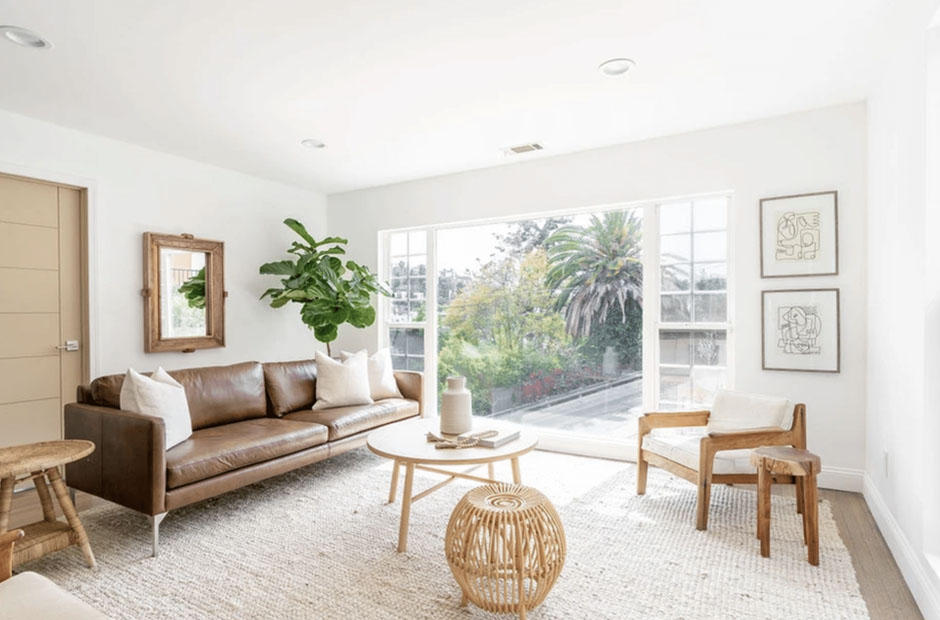
- Float the sofa 8–12 cm away from the wall
- Leave a visible gap behind chairs
- Use narrow console tables
That small shadow line creates depth. Depth expands perception.
Lighting Is a Design Tool, Not Just Utility
Overhead lighting ruins small spaces. It floods the room evenly. Even light removes dimension.
Use layered lighting instead.
Three light levels should exist in every room:
- Ambient (general light)
- Task (reading/work)
- Accent (visual interest)
Accent lighting matters most. Place a warm lamp to graze the anchor wall. The light will catch the pattern texture. Your wall suddenly looks architectural.
Use 2700K bulbs. Cooler bulbs make green tones look artificial.
The Entryway Effect
The first 3 seconds inside a home decide how large it feels.
Most entryways are ignored. They become shoe storage zones. That wastes a huge opportunity.
Create an immediate visual statement.
Steps:
- Add a narrow bench
- Hang a mirror
- Design the facing wall intentionally
The brain measures a home based on the first visible wall.
If the first wall is plain, expectations drop. If the first wall has structure and contrast, the entire home feels curated.
Mirrors help, but only when they reflect something interesting. A mirror reflecting a designed wall doubles the effect.
Storage Without Bulk
Clutter shrinks rooms faster than size ever will.
Avoid deep cabinets. Use vertical storage instead.
Better options:
- Wall-mounted shelves
- Tall bookcases
- Floating nightstands
Floating furniture exposes the floor area. An exposed floor increases perceived space.
Visible floor equals perceived square footage.
Choose furniture with legs. Solid blocks feel heavy. Legged pieces feel lighter.
Texture Over Quantity
People often add more decor to improve a room. The opposite works better.
Use fewer items with stronger materials.
Good materials:
- Linen curtains
- Wood accents
- Woven baskets
- Ceramic lamps
Texture catches light. Shiny surfaces reflect harshly. Matte surfaces soften light.
A textured wall paired with simple furniture looks deliberate. Busy furniture against busy walls looks chaotic.
Curtain Strategy (Highly Overlooked)
Curtains can make or break a room.
Do not hang curtains at the window frame. Hang them near the ceiling.
Why:
- Raises perceived ceiling height
- Lengthens the wall
- Frames the room
Curtains should:
- Touch the floor
- Be light in color
- Be slightly wider than the window
The window will look larger than it is.
The Hallway Opportunity
Hallways are usually wasted. They are actually perfect design corridors.
Long, narrow spaces benefit from rhythm. A repeating pattern creates movement.
Add:
- A runner rug
- One designed wall
- Soft lighting
Your hallway becomes a transition, not a passage.
Transitions make homes feel intentional.
Bedroom Layout That Improves Sleep
Bedrooms should feel grounded.
Do this:
- Center the bed
- Use symmetrical nightstands
- Keep wall decor minimal
Humans relax faster in balanced environments. Symmetry signals safety to the brain.
Avoid placing the bed under a window if possible. Visual instability affects rest.
Use soft lighting and calm tones. A strong headboard wall provides visual security.
The Final Layer: Scent and Sound
Design is not only visual.
A home feels larger when senses align.
Add:
- Soft background music
- Subtle natural scent
- Fabric surfaces that absorb echo
Hard, empty rooms create sound bounce. Echo makes a space feel cold and empty.
Textiles reduce echo. Reduced echo increases comfort.
The Real Secret
Large homes impress. Well-designed homes provide comfort.
You do not need more space. You need a stronger visual structure.
Focus on:
- One anchor wall
- Layered lighting
- Vertical lines
- Floating furniture
- Controlled color
Design changes perception. Perception changes experience.
When walls create depth and hierarchy, a small home stops feeling small. It starts feeling intentional. And intentional always feels bigger.