Basic Information
| Field | Details |
|---|---|
| Name | Unnamed (commonly “Papa Ogre” in stage and comic adaptations) |
| Species | Ogre |
| First Reference | 2001 (film dialogue in Shrek) |
| First On-Stage Depiction | 2008 (Shrek the Musical, opening number “Big Bright Beautiful World”) |
| Canonical Status | Unnamed and off-screen in the films; depicted and named “Papa Ogre” in licensed musical and comics |
| Family | Spouse: Mama Ogre; Son: Shrek; Daughter-in-law: Princess Fiona; Grandchildren: Fergus, Farkle, Felicia |
| Residence | Ogre homeland (rustic environs; swamp-adjacent in some depictions) |
| Personality Traits | Gruff, tradition-bound, pragmatic, old-school ogre ethos |
| Notable Line (referenced) | Shrek jokes that his father once tried to eat him |
| Occupation | Unspecified |
| Status | Unclear in film canon; living in stage/comic portrayals |
Origins in Film Canon
In 2001, Shrek’s father is largely felt, not seen. Shrek jokes that his dad tried to eat him and other shaggy-dog jokes. This brutal joke is a warning and tradition, building Shrek’s childhood swamp. Importantly, the films don’t identify, design, or voice him. Shrek’s former shadow reminds him that ogre parenting can be tough love and tough meat.
By the time Shrek’s world expands—new friends, royal in-laws, and three green babies—the films never circle back to introduce the patriarch in person. He remains off-screen, an absent center of gravity whose influence is measured more in habits than in scenes.
Stage and Comics: Filling the Silhouette
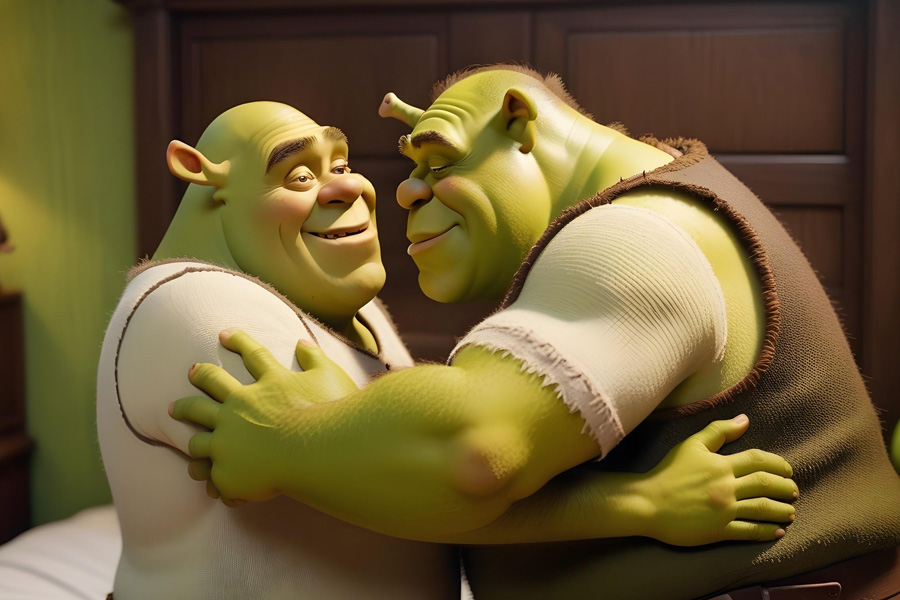
Stage hush breaks. The 2008 Shrek the Musical prologue provides further detail. In “Big Bright Beautiful World,” Mama and Papa Ogre celebrate Shrek’s seventh birthday, the age when ogres send children out alone. It’s abrupt and ritualistic, more custom than tenderness, and symbolises the boy’s first steps towards swamp sovereignty.
Even licensed comics are family-oriented. Papa Ogre visits the swamp, sizes up grandchildren, and bristles when ogrehood gets too cuddly in domestic scenes with Mama Ogre. The theme is the same: Papa Ogre is the old way, sceptical of soft edges, but devoted to his kid and the mud-splattered heart of family.
Family and Relationships
| Family Member | Relation | First Prominent Depiction | Notes |
|---|---|---|---|
| Shrek | Son | Film: 2001 | References to a rough upbringing and ogre traditions; no on-screen scenes with father in films. |
| Mama Ogre | Spouse | Stage: 2008 | Partner in the age-seven send-off; often depicted as stern yet ritual-focused. |
| Fiona | Daughter-in-law | Film: 2001 | Papa Ogre’s family expands through Shrek’s marriage; dynamics explored mainly in comics and fan material. |
| Fergus, Farkle, Felicia | Grandchildren | Film: 2007 | Triplets who represent a new, cheerful form of ogrehood; occasionally seen reacting to grandparents in expanded media. |
| King Harold & Queen Lillian | In-laws (through Fiona) | Film: 2004 | Royal contrast to Shrek’s rough-hewn family roots; no canonical interaction with Papa Ogre in films. |
Traits, Traditions, and the Ogre Ethos
Papa Ogre is built on customs: the age-seven send-off, self-reliance, and the unspoken rule that fear protects ogres. He assesses parenting success by survival and swamp savvy. The films suggest a tough background; the stage and comics add dance and humour.
There’s ritual, too, layered like sediment. The send-off is equal parts practical and symbolic—an ogre child must step out, carve a home, and earn solitude. Papa Ogre embodies that worldview; tenderness isn’t absent, but it’s translated through tradition, thick as peat and twice as stubborn.
Timeline of Appearances and Mentions
| Year | Medium | Event |
|---|---|---|
| 2001 | Film (Shrek) | Shrek references his father in jokes and anecdotes; no on-screen presence. |
| 2004 | Film (Shrek 2) | Family themes deepen, but father remains off-screen. |
| 2007 | Film (Shrek the Third) | Shrek’s own fatherhood begins; still no depiction of his father. |
| 2008 | Stage (Shrek the Musical) | Papa Ogre appears in the opening number, sending young Shrek out at age seven. |
| 2010s–present | Licensed comics and stage productions | Various portrayals show Papa and Mama Ogre meeting grandchildren and reacting to Shrek’s life choices. |
Character Study: The Unnamed Patriarch
He’s unnamed but known. Papa Ogre represents the gruff scaffolding that made Shrek who he is in every incarnation. He likes power, seclusion, and a private swamp. In the peripheral, you see reluctant warmth: a softening expression, a tradition that feels like love in armour.
The absence of a formal name is telling. It preserves the archetype—father as form, not figure. In a franchise crowded with fairy-tale royalty and talkative sidekicks, Shrek’s father remains deliberately elemental, a presence like a foghorn: sparse, resonant, and fundamentally useful.
Memorable Beats and Resonant Notes
- The age-seven ritual anchors Papa Ogre as a custodian of custom. It’s a rough rite, but it’s coherent—a compass for a culture that prizes self-sufficiency.
- Shrek’s joke about being nearly eaten is grotesque and affectionate in the same breath. It captures how ogres express care through a language of danger and grit.
- The licensed material’s porchlight moments—grandparents sizing up the triplets—introduce generational friction and charm, letting Papa Ogre grapple with modern ogrehood’s softer hues.
Cultural Footprint
Although he never appears in the films, Shrek’s father is influential. Papa Ogre is still performed in community and regional musicals, bringing the story and tradition to life. Fan art and family-tree films reveal his outline, suggesting that unidentified ancestors create heroes more than crowns and castles.
In that sense, Papa Ogre is not a character so much as a force: the mud that made the foundation, the old tune that hums beneath the banter, the stern hand that sent a green kid into a world loud with possibility.
FAQ
Does Shrek’s father have a proper name?
He does not have a canonical personal name in the films; in licensed adaptations he is commonly called “Papa Ogre.”
Is Shrek’s father ever shown on screen in the movies?
No, he is referenced but never appears; his on-stage depiction arrives in the musical.
What is the age-seven ogre tradition?
In the musical, ogre parents send their child out alone at age seven to build independence and a home.
Does Shrek’s father meet Fiona?
Not in the films; interactions appear in some licensed materials but remain outside core movie canon.
Are Papa and Mama Ogre alive during Shrek’s adult life?
The films don’t say; stage and comics often portray them as living and capable of visiting.
What is Papa Ogre’s personality like?
Gruff, tradition-forward, and skeptical of “soft” ogrehood, with flashes of reluctant warmth.
Does he interact with Shrek’s children?
In certain licensed comics and performances, yes; he reacts to the triplets with old-school ogre expectations.
Why is he important if he barely appears?
He embodies the traditions that forged Shrek’s identity, adding texture to the hero’s past and values.