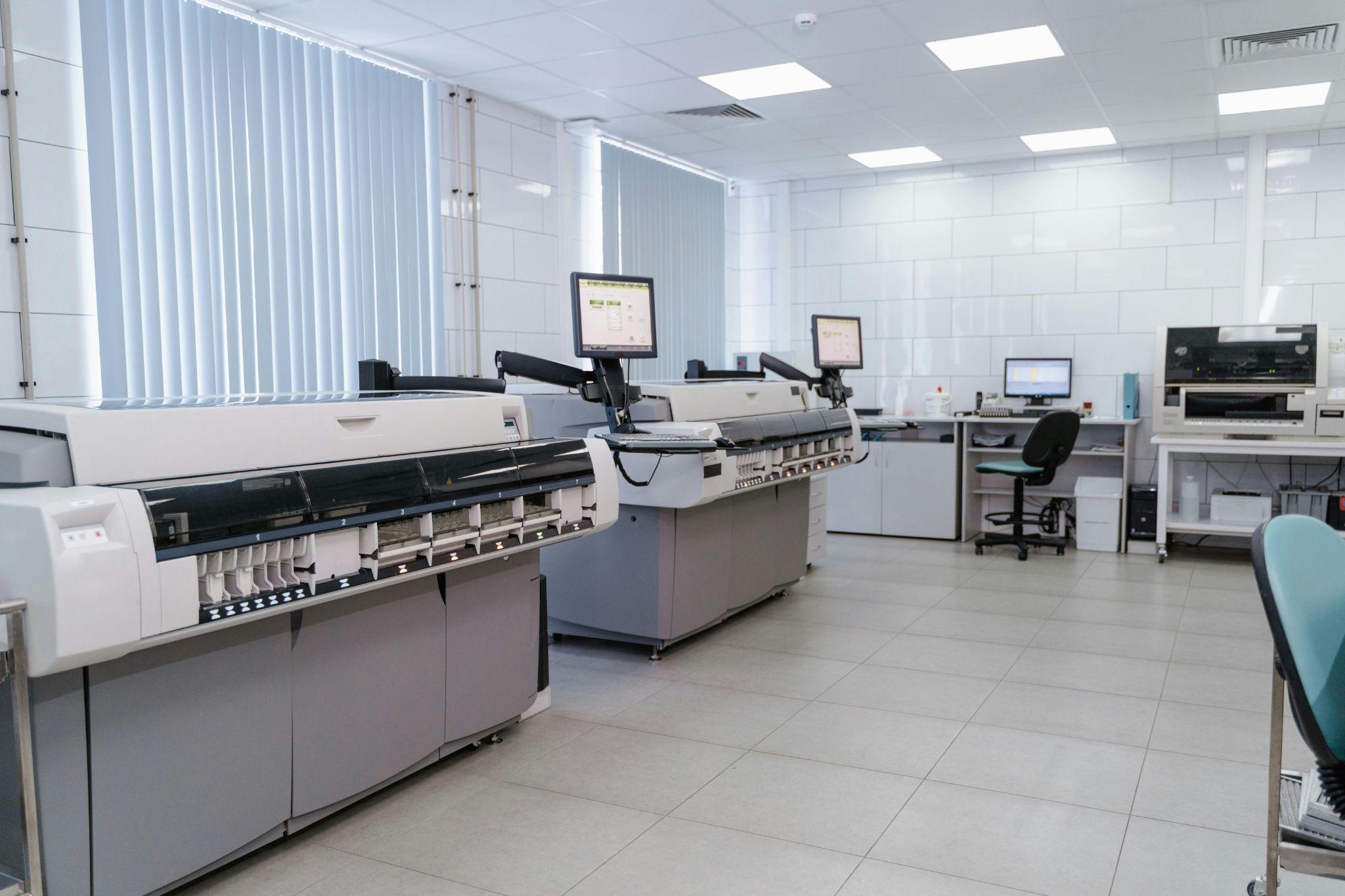
Walk into a modern lab. You will see more than pipettes and Petri dishes. You will see a symphony of technology. This tech is not just for fancy experiments. It is a practical productivity engine. It tackles the daily grind. It solves common headaches. It lets scientists focus on science.
Technology enhances team productivity in tangible, powerful ways. It saves time, prevents errors, and unlocks new forms of collaboration. Let’s look at the real-world upgrades happening right now.
Taming the Data Deluge
Research generates oceans of data. Managing it manually is a nightmare. Files get misplaced. Version control becomes chaos. This kills productivity. Modern data platforms solve this. They provide a central, cloud-based home for everything. Experimental protocols live there. Raw instrument data gets uploaded automatically. Analysis scripts are stored and shared.
This creates a single source of truth. Team members can find anything instantly. They can reproduce any analysis. This is crucial for complex projects. Think about a project using single cell whole genome sequencing. The data files are enormous. The analysis steps are intricate. A shared bioinformatics platform is not a luxury. It is a necessity for team success.
Eliminating Repetitive Drudgery
The bane of any lab is monotony. Aliquotting tubes. Filling plates. These tasks are essential. They are also mind-numbing. They are prone to error. Automated liquid handlers and robotics take over this drudgery.
A scientist programs the protocol once. The robot executes it perfectly every time. This frees up hours, even days, each week. Team members stop being manual laborers. They become experiment designers and data interpreters. Morale improves. Turnover decreases. Intellectual energy gets redirected toward discovery.
Supercharging Communication
A lab is a team sport. Miscommunication causes delays. It leads to repeated work. Digital lab notebooks are a game-changer. They replace paper notebooks that get lost on benches. These digital tools allow real-time sharing. A researcher in California can see her colleague’s notes in Copenhagen instantly. They can tag each other in comments. They can link directly to data files.
Project management software takes it further. It visualizes timelines and dependencies. Everyone knows who is doing what. Bottlenecks become visible before they cause a crisis.
Preventing Costly Mistakes
Human error is expensive. A mislabeled sample can ruin a month’s work. A calculation typo invalidates an entire dataset. Technology builds guardrails. Electronic lab notebooks can enforce protocols. They require mandatory fields. Barcode scanners ensure sample identity is correct. Automated calculators within spreadsheets prevent math errors.
These are simple tools. Their impact is profound. They protect the team’s most valuable asset: their time and data integrity.
Accelerating Analysis, Not Just Acquisition
Collecting data is one thing. Understanding it is another. Teams often get bogged down in analysis. Advanced software tools break this logjam. Visualization programs turn number columns into clear graphs instantly. Statistical packages run complex tests with a few clicks. Machine learning algorithms can screen thousands of images for rare events.
This shifts the team’s effort. Less time is spent wrestling with software. More time is spent discussing what the results actually mean. Insight arrives faster.
Enabling Remote Collaboration
The modern team is often distributed. A postdoc might work from home. A collaborator is in another country. Technology makes this seamless. Cloud-based instruments can be monitored from a laptop. Team meetings happen over video conferencing with shared data screens. Virtual whiteboards facilitate brainstorming.
Physical location no longer dictates productivity. The lab becomes a digital hub. Talent can be leveraged from anywhere in the world.
Providing Always-On Training
Onboarding new team members is slow. Technology speeds it up. Libraries of training videos can be created. Animated protocols show complex techniques step-by-step. New hires can learn at their own pace. They can review material anytime.
This reduces the burden on senior scientists. It ensures techniques are transferred consistently. Knowledge stays within the lab, even when people leave.
The Takeaway
In short, technology is the ultimate lab teammate. It handles the boring stuff. It organizes the chaos. It connects people. It safeguards quality. The goal is not to replace scientists. It is to remove every barrier between a brilliant idea and its execution.
A productive team is a happy, focused, and empowered team. The right technology provides exactly that. It turns daily friction into smooth momentum. And that is how breakthroughs are built.