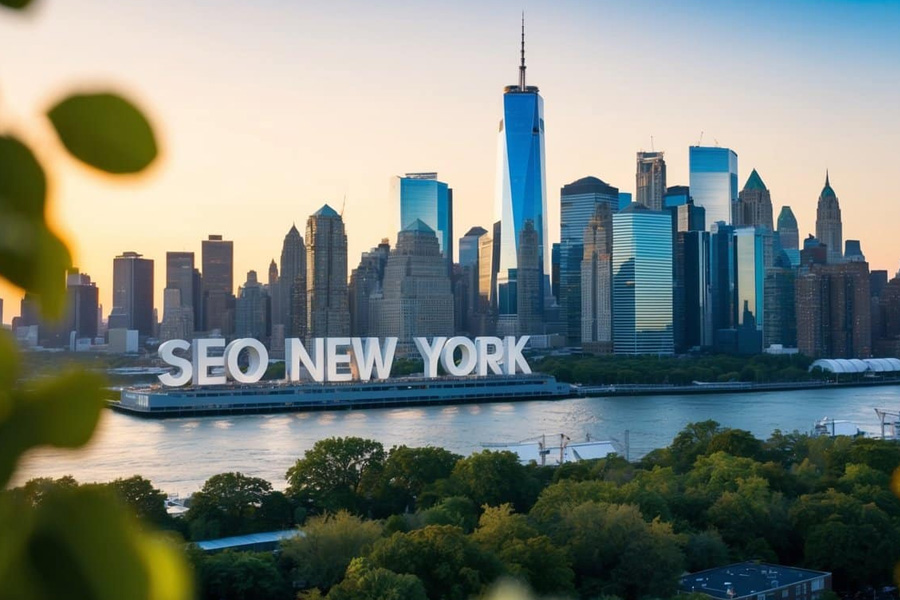
What Organic SEO Really Means in New York
Organic SEO is the craft of earning your visibility rather than renting it. It’s how you structure, write, and promote your site so search engines recognize you as the best answer—no daily ad meter running. In a city where millions of searches happen between subway stops, organic visibility is the difference between being discovered and being invisible. Done well, it compounds: content deepens, links accrue, trust builds, and your brand becomes the obvious choice.
Why the New York Market Raises the Stakes
New York compresses every industry, every niche, into a few square miles—and the SERPs are just as crowded.
- The competition is relentless: thousands of sites chase the same customers and the same keywords.
- Costs climb fast: paid clicks in NYC are pricey, so organic becomes your durable moat.
- Local relevance rules: intent shifts block by block, from SoHo to Sunnyside.
- Trust is currency: high organic rankings signal authority in a city built on reputation.
The Core Pillars of NYC Organic SEO
Treat these like the boroughs of your strategy—each vital, each with its own flavor.
- Keyword research
- Mine for hyperlocal intent: “best coffee shop in Bed-Stuy,” “Upper West Side pediatrician,” “Queens vegan catering.”
- Balance head terms with neighborhood and long-tail variations to capture intent at every stage.
- Layer in commercial, transactional, and informational queries to map a full funnel.
- On-page optimization
- Write title tags and meta descriptions that carry location cues naturally.
- Use clear H1–H3 structures and internal links that guide users (and bots) deeper.
- Add descriptive alt text and structured data (schema) for services, products, FAQs, and local business details.
- Content creation
- Publish service pages tailored to neighborhoods and use cases.
- Ship editorial that sounds like the city: guides, rundowns, event tie-ins, and how-tos.
- Mix formats: text for depth, short video for speed, infographics for shareability.
- Link building
- Earn coverage from NYC publications, niche blogs, and community orgs.
- Partner locally: co-marketing, sponsorships, charity tie-ins, neighborhood associations.
- Claim reputable directories and professional lists without spamming.
- Technical SEO
- Prioritize speed—mobile-first, image compression, lean code, smart caching.
- Lock down indexation, canonicals, sitemaps, and HTTPS.
- Monitor Core Web Vitals; small wins add up in a city with zero patience for slow sites.
- Local SEO (Google Business Profile)
- Keep NAP details consistent across the web.
- Add robust categories, service areas, photos, and posts.
- Ask for reviews early and often, and respond with care; those stars move needles.
Organic vs Paid in a City of High CPCs
Paid media is a billboard in Times Square—bright, instant, and gone when the lights turn off. Organic is your corner storefront that neighbors learn to love.
- Cost: Organic demands time and craft; paid demands constant spend.
- Longevity: Organic compounds; ads stop when you stop.
- Trust: Users favor earned rankings over sponsored placements.
- ROI: In high-cost markets, organic often wins the marathon.
Content That Feels Like New York
Write like you’ve walked the block. Your best-performing pieces often blend utility with a local pulse: a map of hidden gems, a seasonal trend digest, a playbook tailored to borough quirks.
- Localized storytelling: neighborhood profiles, customer spotlights, community highlights.
- Evergreen plus timely: “How to Choose a Manhattan Law Firm” and “NYC Retail Trends This Season.”
- Multimedia: short-form video for fast hits, podcasts with local voices, interactive maps for dwell time.
Measurement That Actually Moves the Needle
Make analytics your compass, not your report card.
- Track: organic sessions, keyword movement, CTR, conversion rate, assisted conversions, and local pack visibility.
- Investigate: landing pages that underperform, queries with intent gaps, pages with high impressions and low CTR.
- Iterate: ship updates weekly—titles, intros, FAQ blocks, internal links, schema tweaks—and watch the curve bend.
Industry Nuances Across the Five Boroughs
The playbook shifts as your audience does.
- Hospitality and dining
- Own “near me” and “best [cuisine] in [neighborhood]” terms.
- Menus as structured data, fresh photos, and review velocity matter.
- Real estate
- Hyperlocal pages (“Carroll Gardens brownstones,” “Long Island City rentals with skyline views”).
- Fast media, virtual tours, and trust signals (bios, accolades, press) drive conversions.
- Professional services
- E-A-T on display: credentials, case studies, testimonials, detailed service pages.
- Educational content that solves problems before the first call.
- E-commerce
- Product SEO plus local angles (NYC shipping speed, pickup, borough-specific gifting guides).
- Merchandising through content: lookbooks, UGC, and comparison pages.
Roadblocks Most NYC Brands Hit (And How to Dodge Them)
- Intense competition: carve niches with specificity—service, audience, and location layers.
- Thin content: expand with real expertise, examples, and supporting media.
- Slow sites: cut the bloat, compress assets, prioritize mobile.
- Algorithm shifts: diversify traffic sources, keep technical hygiene tight, refresh content quarterly.
- Audience diversity: map personas—from Midtown execs to Bushwick creatives—and serve each intent path.
Advanced Moves for Outranking the Pack
- AI-assisted research: surface clusters, questions, and semantic gaps faster; still write like a human.
- Voice and conversational search: optimize for natural phrasing and featured snippets.
- Video SEO: location-tagged shorts, “how it works” reels, and YouTube chapters with keyword-rich descriptions.
- Structured data: FAQ, HowTo, Product, Review, and LocalBusiness schema to earn rich results.
- E-E-A-T momentum: author bios, editorial standards, real-world proof, and consistent brand voice.
What’s Next for Search in the City
Search is getting visual, conversational, and zero-click. That means:
- More answers on the results page—win visibility with snippets, FAQs, and strong metadata.
- Personalization that favors proximity and preference—double down on accurate local signals.
- Collabs and community as distribution—local creators and organizations expand reach beyond algorithms.
- Sustainability and ethics shaping brand perception—clarity, impact, and follow-through matter.
When to Call in a New York SEO Agency
Partner with a borough-by-borough expert for scale, speed, or specialised talent. Find teams that offer full-stack audits, custom keyword maps, technical remediation, editorial calendars, outreach programs, and monthly revenue-linked ranking data. With the proper team, you can skip guesswork and execute what propels this market.
FAQ
What is organic SEO?
Organic SEO is the process of improving unpaid search visibility through content, links, and technical optimization so your site ranks naturally.
How long does SEO take in NYC?
Expect meaningful traction in 3–6 months, with compounding gains over 6–12 months as content and authority build.
Do I still need paid ads if I invest in organic?
You can run both; paid drives immediate traffic while organic builds durable, compounding visibility and trust.
What’s the most important ranking factor?
There’s no single lever, but relevant content supported by strong technical health and quality backlinks wins consistently.
How important are reviews for local rankings?
Very—volume, recency, and response quality influence local pack visibility and user trust.
Should I create pages for each neighborhood?
If you genuinely serve those areas, yes—make them unique, useful, and not just copy-paste location swaps.
How often should I publish content?
Prioritize consistency and quality; a steady cadence (weekly or biweekly) outperforms sporadic bursts.
What tools should I use to track progress?
Use analytics for traffic and conversions, search console for queries and indexing, and an SEO platform for rankings and links.