Why October’s Ups and Downs Hit Your System Hard
October is the shoulder season that never sits still. Mornings can bite, afternoons can blaze, and your HVAC has to keep up with those mood swings says KRS Property Management. The kicker: systems use the most energy at startup, so when temps jump around and your unit clicks on and off, you pay in higher bills and wear-and-tear. Short cycling—rapid starts and stops—keeps your home from reaching steady, comfy temps and stresses motors, fans, and compressors.
This month’s drama comes from long, cool nights followed by sunlight that still has some summer swagger. You can see 20–30°F swings in a single day. That’s a constant call-and-response your HVAC wasn’t built to handle every hour on the hour.
How Different Systems React to Fast Shifts
Equipment handles October differently. Longer runs are better for furnaces than frequent re-fires. Heat pumps are great in moderate autumn weather, but ping-ponging between heating and cooling reduces efficiency. Too sudden a pivot wastes energy even in variable-speed systems, which smooth demand.
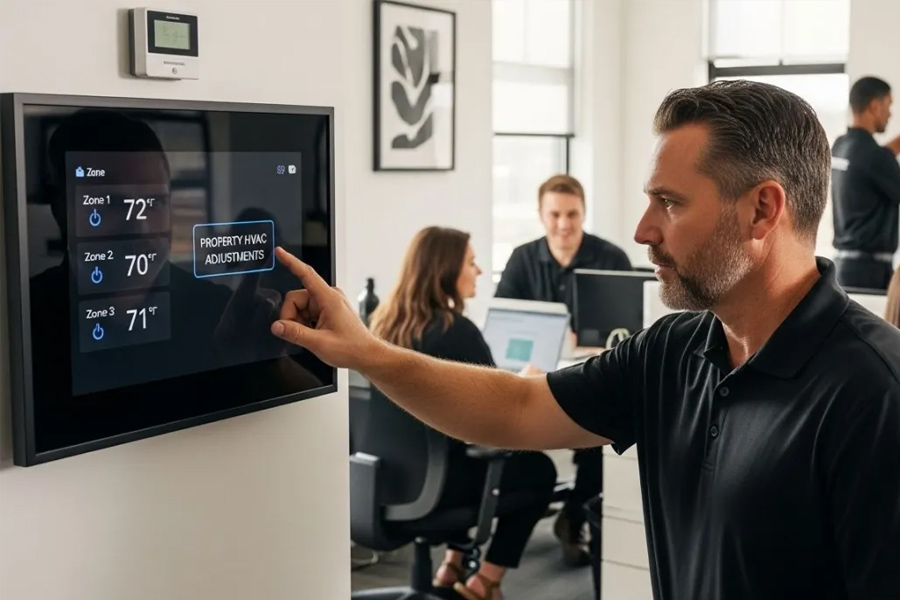
Thermostats sit in the director’s chair. A smart thermostat that anticipates shifts instead of reacting to your sudden “I’m cold!” moments can stage gentle changes, easing strain and keeping comfort consistent. Think ramp-up, not sprint.
Quick Cues for Temperature Swings
- 40–50°F outdoors: Expect intermittent heating cycles. Keep comfort with moderate setpoints and avoid big manual bumps.
- 50–65°F outdoors: Systems can often idle. Crack windows for cross-breezes and lean on passive warmth.
- 65–75°F outdoors: You might be tempted to cool. Try fan-only mode or ceiling fans before turning on AC.
- Daily 20°F+ swings: Your system will want to short cycle. Adjust the thermostat gradually and pre-heat/cool before the swing peaks.
Tactics for Smoother Transitions
- Set a “middle path” temperature. Somewhere near 68°F often keeps both mornings and evenings reasonable without constant fiddling.
- Use natural ventilation when afternoons are mild. Cross-ventilate with opposite windows open; shut them before dusk to trap warmth.
- Run ceiling fans on low to distribute comfort. Clockwise at low speed helps push warm air down when nights get chilly.
- Work the sun. Open south-facing curtains during sunny hours for free heat; close them at dusk to hold it.
- Dress the house—and yourself. Layer drapery and rugs to soften heat loss, and layer clothing to resist thermostat yo-yos.
Maintenance Moves Before the Cold Locks In
October is your tune-up month. Every little bit of efficiency counts more when temperatures seesaw.
- Refresh air filters monthly in fall. A clogged filter can cut efficiency by up to 15%, which hits harder when cycling increases.
- Clear the outdoor unit. Leaves, grass clippings, and windblown debris choke airflow—keep a two-foot buffer around equipment.
- Seal duct leaks you can see. Mastic or foil tape (not cloth duct tape) on seams and joints can recover 20–30% of lost air in leaky systems.
- Check weatherstripping and door sweeps. Stopping drafts reduces how often the system has to “catch up” when temps drop after sunset.
- Book a professional check if it’s been a year. A tech will test safety controls, verify refrigerant levels for heat pumps, and tighten electrical connections before the real cold arrives.
Dialing In Smart Thermostats for October
Programming is where you turn October from chaotic to chill. Aim for small, predictable nudges.
- Use time blocks that mirror the day: slightly warmer for dawn and evening, a notch cooler mid-afternoon.
- Make changes in one- to two-degree steps. Rapid swings invite short cycling and discomfort.
- Sample schedule to test:
- Early morning (5–8 AM): 68–70°F
- Midday (8 AM–5 PM): 66–68°F
- Evening (5–10 PM): 68–70°F
- Overnight (10 PM–5 AM): 65–67°F
- For heat pumps, enable “adaptive recovery” or “smart recovery.” It preheats gently so you avoid expensive auxiliary heat kicks.
- Use fan-only mode during warm spells. It evens out hot/cold pockets without firing the burners or compressor.
Whole-Home Tweaks That Save Energy
Your HVAC can only do so much without a home that plays along. October is prime time for low-cost upgrades that pay back quickly.
- Insulate the attic hatch and add a gasketed cover. The attic is your biggest thermal battleground.
- Install thermal curtains or cellular shades. Open by day, close at dusk to slash heat loss through glass.
- Zone what you can. Close doors and partially shut vents to rarely used rooms; focus comfort where you live and work.
- Consider a small, efficient space heater for a high-use room. It can let you lower the whole-home setpoint by a degree or two.
- Add a programmable bathroom fan timer. Quick humidity and heat bursts can linger; exhausting them helps the rest of the house stay in balance.
Plan Now for a Leaner Winter
Treat October like a dress rehearsal. Take notes. Do you hear more frequent starts? Cold corners that never quite warm? Temperature drifts when the wind picks up? Those clues point to issues worth fixing before winter bills arrive.
Variable-speed equipment or blowers save power and provide more consistent comfort if your system regularly overshoots and undershoots. Request an energy assessment from your utility—blower-door testing and infrared scanning often show leaks and insulation gaps that cause short cycling and unequal rooms. Many suggestions pay off in a season or two.
What to Do When the Forecast Whiplashes
- If a 25°F drop is coming overnight, pre-heat your home by 1–2°F in late afternoon, then hold steady.
- Expect a warm, sunny day after a cold morning? Let the sun do the heavy lifting: shades open midday, HVAC idle or fan-only, then close up as shadows lengthen.
- If wind is in the forecast, draft-proof before it hits—close fireplace dampers, lock windows (locks improve air seals), and check that exterior doors latch snugly.
FAQ
How often should I change my thermostat settings in October?
Limit it to one morning setpoint and one for afternoon/evening, with small (1–2°F) changes. Frequent tweaks trigger short cycling and higher energy use.
Should I turn the system off on mild days?
Yes, if it’s 65–75°F outside, open windows for cross-ventilation and let the system rest. Close up before sunset to retain warmth.
Is covering the outdoor AC unit a good idea now?
Don’t wrap it fully; that traps moisture and invites corrosion. A simple top cover or plywood sheet blocks debris while leaving sides open.
What size temperature swing is rough on efficiency?
Swings over 20°F within half a day strain most systems. Pre-heat or pre-cool gradually to cushion the change.
How do October strategies differ from peak summer or winter?
It’s all about flexibility—moderate setpoints, passive solar gain, and avoiding rapid mode changes take priority over constant heating or cooling.