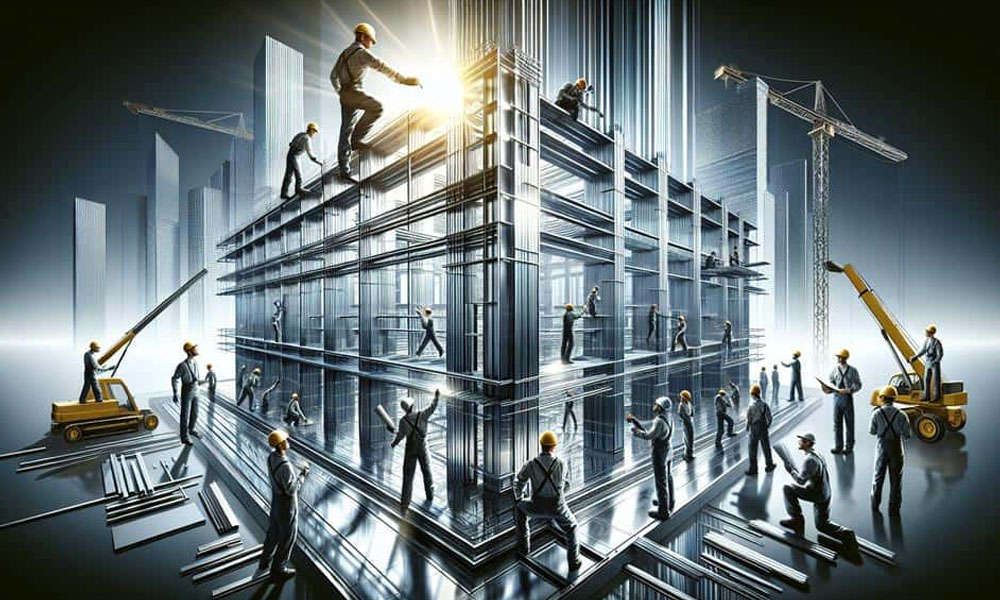
Modern construction increasingly relies on materials that combine durability, versatility, and aesthetic appeal. Among these, stainless steel has emerged as a preferred choice for architects and engineers, offering a unique balance of strength and design flexibility. Its resistance to corrosion, fire, and wear makes it suitable for a wide range of applications, from structural frameworks to decorative elements. Beyond its practical benefits, stainless steel supports innovative architectural designs, enabling the creation of striking façades, sleek interiors, and long-lasting infrastructure that can adapt to evolving urban environments.
The material’s adaptability also allows for sustainable construction practices, as stainless steel is highly recyclable and contributes to long-term building efficiency. Engineers and designers are continuously exploring new ways to integrate it into both residential and commercial projects. For those interested in exploring these possibilities further, you can learn more about the transformative role of stainless steel in shaping modern construction practices. Its durability ensures that structures maintain their integrity over decades, reducing the need for frequent repairs or replacements. Additionally, its sleek, modern appearance can complement a variety of architectural styles, making it a versatile choice for contemporary design.
3D Printing and Additive Manufacturing
3D printing, particularly through wire-arc additive manufacturing (WAAM), is forging new possibilities for stainless steel in construction. This technology advances beyond traditional casting and welding by directly building components layer by layer, offering unprecedented freedom in shaping complex structures. The MX3D bridge in Amsterdam is an example where an entire pedestrian bridge was 3D-printed in stainless steel, showcasing digital design and sensor-equipped monitoring for real-time structural assessments.
This construction method minimizes waste, enhances customization, and enables rapid prototyping—key advantages for modern architecture that prioritizes efficiency and unique design elements.
Smart Steel Structures
The integration of Internet of Things (IoT) technology into steel-based frameworks has revolutionized building management. Smart steel structures are now equipped with sensors that continuously monitor ambient conditions, load stresses, and energy usage, enabling predictive maintenance and optimal resource allocation. These capabilities help operators prevent failures, extend the lifespan of buildings, and improve occupant comfort.
Real-time data feeds also facilitate automated systems for regulating lighting, climate, and security, advancing energy efficiency and sustainability—critical in the era of smart cities.
Advanced Coatings and Finishes
Stainless steel continues to push boundaries in exterior design and longevity through cutting-edge coatings and surface treatments. Powder coating, electroplating, and chemical film deposition protect steel from corrosion and extreme weather. These advancements enhance the structural integrity of bridges, skyscrapers, and public monuments that are exposed to harsh conditions.
Architects also gain creative flexibility, using new finishes to introduce unique colors, matte surfaces, or intriguing textures. Such enhanced customizability supports contemporary aesthetics without sacrificing thermal resistance or mechanical durability.
Sustainable Architecture Solutions
Builders increasingly rely on stainless steel as they prioritize eco-friendly, long-lasting construction. Its high recycled content and straightforward recyclability at end-of-life align it with the principles of the circular economy. Stainless steel’s resilience means structures, cladding, and roofing made from it require less maintenance and fewer replacements. This durability is a cornerstone for green buildings aiming to minimize resource consumption and carbon footprint.
Aerospace Engineering Advancements
Stainless steel’s exceptional strength-to-weight ratio and resistance to harsh environments have made it integral to both aviation and aerospace sectors. In spacecraft and jet engines, specialized steel alloys withstand temperature extremes and corrosive atmospheres, ensuring mission longevity and crew safety. This application area continues to drive innovation in material science and manufacturing techniques as aerospace exploration reaches new heights.
Renewable Energy Infrastructure
Stainless steel is a linchpin in green power generation, supporting wind turbines, solar mounting systems, and hydroelectric dams. Its resistance to environmental stress makes it ideal for outdoor and offshore energy facilities. These features enable energy providers to build reliable, long-lasting systems as renewable energy becomes central to the global power grid’s future.
Tensioned Stone Structures
The creative use of stainless steel in tensioned stone structures merges traditional masonry with cutting-edge engineering. Here, high-strength cables tension discrete stone pieces, maximizing compressive strength and architectural beauty. This innovation unlocks new aesthetic possibilities in civic structures, museums, and landmark buildings while maintaining core engineering values—durability, resilience, and minimal maintenance requirements.
Conclusion
Stainless steel’s legacy in construction is more dynamic than ever, thanks to advancements across material technology, digital manufacturing, and green architecture. Its role in pioneering 3D printing, smart infrastructure, sustainable design, aerospace, and renewable energy highlights its unmatched versatility. As construction continues to merge with technology and sustainability, stainless steel will remain a trusted ally for building the landmarks of tomorrow.