Regulations: The Rules That Shape Every Mile
You don’t just drive a big rig—you operate under a thick rulebook that shadows every turn. From driver qualifications and hours-of-service limits to vehicle maintenance and load securement, trucking is governed by a lattice of federal standards and state-level laws. For interstate carriers, federal rules dictate the foundation, while state law layers on venue, procedure, and additional requirements. When a crash happens at the intersection of those rules, the analysis gets thorny fast.
One violation—a driver pushing past legal operating hours, skipped brake inspections, or cargo that isn’t secured per spec—can tilt liability in surprising ways. Yet identifying which regulations were triggered in a particular run is rarely simple, especially when a truck crosses borders mid-route, contracts involve multiple companies, and the paperwork trail spans terminals and time zones. Understanding the regulatory mosaic becomes the first act in a longer, more intricate story.
Multiple Players, Multiple Agendas
Many car accidents involve two drivers and two insurance. A truck crash? Think ensemble. If a part fails, you may deal with the driver, carrier, parent company, third-party logistics organisations, brokers, goods loaders, maintenance contractors, and component makers. Each party brings its own legal staff, strategy, and policy.
Complexity accumulates there. Driver: employee or independent contractor? Was the carrier hiring and training? Did another company pack the cargo that shifted during a hard brake? Did a maintenance company approve weak repairs? Every relationship and contract—often with indemnity clauses and finger-pointing language—can modify liability.
Insurance Webs and Policy Fine Print
Layered coverage applies to truck crash claims. Motor carriers, drivers, caravan owners, freight owners, and service contractors often have unique policies. Policies stack, exclude, and overlap in confusing ways. Endorsements and filing requirements might cover uncovered situations.
There’s more. Some motor carriers carry specialized endorsements designed to protect the public, and excess policies can sit above primary coverage with different triggers. The practical effect is a longer runway of negotiation—and a lot of careful reading. Determining who pays, and how much, becomes a chess match played in the fine print.
Injuries That Change Everything
Trucks move massive weight, and when things go wrong, injuries are often severe. Survivors may face complex fractures, spinal injuries, brain trauma, or internal damage that doesn’t show up fully in early scans. The care arc can be long—surgeries, rehab, adaptive equipment, and sometimes lifetime support.
Valuing those losses isn’t just about today’s bills. It’s about credible projections: future medical needs, work limitations, household services, and the real impact of pain and loss of normal life. That requires coordinated input from medical specialists, economists, and sometimes life-care planners, translating a human story into numbers that hold up under scrutiny.
Evidence: The Story Told by Data and Paper Trails
If a truck crash were a movie, you want every aspect of the video. Medical records, witness testimonies, site images, and police reports form the foundation. Trucking adds electronic logging device records, engine control module “black box” data, dashcam video, GPS breadcrumbs, dispatch notes, maintenance logs, and bills of lading as decisive sources. Even weigh-station receipts can recreate a timeline.
The catch? The parties under investigation hold much of this evidence. Preserving becomes essential. Timely requests and investigations prevent deletion or “routine” data overwrites. The parts reveal speed, braking, hours on duty, load handling, and if safety standards were followed in practice.
Cargo, Loading, and the Physics of a Crash
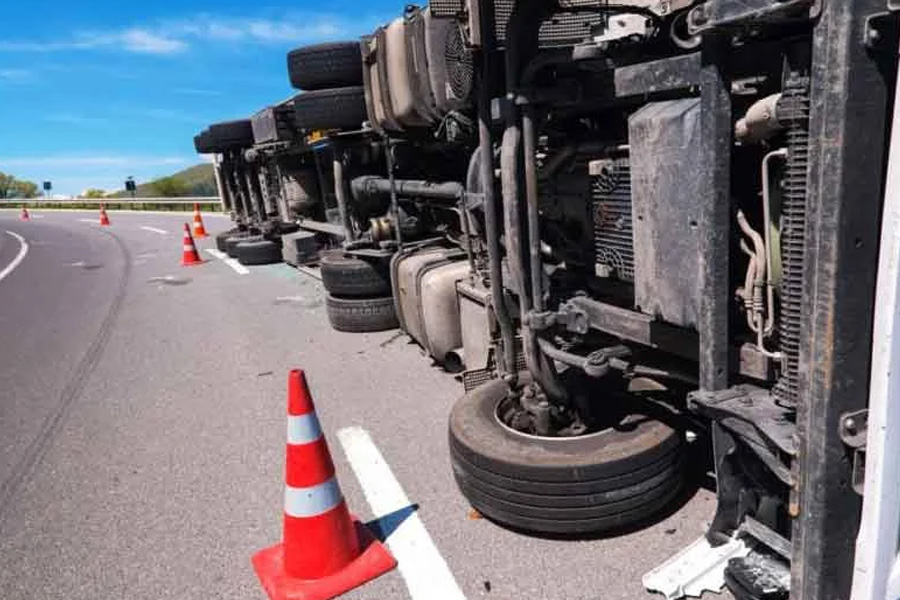
Cargo drives results, not just rides. Load imbalance can prolong stopping distances, drag rigs off-center, or cause catastrophic rollovers. When traffic is chaotic, chains, straps, and blocking keep force vectors predictable. When a cargo shift or hazardous materials crash occurs, loaders, shippers, and anybody who handled the goods plan are responsible.
An skilled investigator determines who chose packaging, secured it, and approved load status. A blueprint can show if a safety step was skipped or a shortcut was made under time pressure. The argument generally hinges on load planning and shipping documents.
The Employee vs. Contractor Puzzle
Trucking titles and labelling like “owner-operator” don’t automatically determine liability. Judges and investigators examine control: who establishes routes, provides equipment, timetables, and enforces safety. If a firm has significant control, contractor and employee can blur, shifting obligation to the carrier.
This is one reason driver qualification files, training logs, and safety audits matter. They signal who was truly steering not only the truck but the operational choices that preceded the crash.
Fault, Proportion, and How the Story Gets Scored
Truck collisions rarely have only one villain. Maybe he was speeding. Maybe the trucker was tired. The brake service may have been overdue enough to matter. Many jurisdictions share fault by percentage and recoup based on such assignments. The narrative—the why and how—must be carefully crafted from scene markings to digital logs.
Accident reconstruction often steps in here, combining physics, forensics, and data to model what happened frame by frame. When done well, it doesn’t just assign blame; it clarifies causation, which is the cornerstone of every claim.
Timing, Venue, and the Stakes of Where a Case Lands
A crash can start on a rural highway and end in a courtroom hundreds of miles away. Where a case is filed, which laws apply, and how deadlines run can dramatically influence the outcome. Statutes of limitation set the clock. Venue rules and jurisdiction decide the stage. When interstate freight is involved, contract terms and forum selection clauses can complicate the map even more.
The practical tip from the inside: the earlier a case is organized, the more likely critical evidence is preserved and the clearer the choices about where, when, and how to pursue a claim.
Technology, Telematics, and the Modern Truck
Today’s rigs roll data centres. Telematics records speed, hard braking, lane departures, hours-of-service, and maintenance. Cameras track the road and cabs. ELDs track duty status minute-by-minute. After a crash, these tools tell the reality.
But tech can cut both ways. Missing data raises questions. Inconsistent logs invite scrutiny. System alerts ignored over time can look like negligence. The digital trail supports the story—if you know where to look and how to interpret it.
FAQ
Who can be held liable in a truck crash?
Potentially the driver, the motor carrier, a parent company, freight loaders, maintenance contractors, brokers, or component manufacturers, depending on who controlled the risk and what failed.
Why are truck accident cases more complex than car crashes?
They involve heavier vehicles, stricter regulations, multiple corporate actors, layered insurance, and specialized evidence like ELD and ECM data.
What evidence matters most after a truck collision?
Scene documentation, witness statements, medical records, plus trucking-specific data such as ELD logs, ECM downloads, dashcam video, maintenance files, and shipping documents.
How do hours-of-service rules affect liability?
If a driver exceeds legal duty limits or falsifies logs, that violation can support fault and help explain fatigue-related errors.
Can cargo loading affect who’s responsible?
Yes; improper loading or securement can shift liability toward shippers or loaders if their actions contributed to the crash.
How are severe injuries valued in these cases?
Valuation blends current medical costs with credible projections of future care, lost earnings, and the human impact documented by experts.
Do insurance policies stack in truck cases?
They often layer, with primary and excess coverage and endorsements that can change payout obligations depending on the facts.
What’s the role of “black box” data from the truck?
Engine control module and telematics data reveal speed, braking, and performance, helping reconstruct events and test narratives against physics.