Set the Scene
Morning rituals, nighttime wind-downs and fast touch-ups on the way out are all told on the vanity in every beautiful bathroom says Tide Property Management solutions. Treating it as the main point makes the room feel intentional. With the correct proportions, materials, storage, lighting, and cinematic touches, your vanity becomes the anchor that helps everything else make sense.
Measure Like a Pro
A beautiful vanity that cramps your walkway or blocks a door will never feel right. Start with a tape measure and work backward from your realities—clearances, plumbing locations, and door swings.
- Plan for at least 30–36 inches of front clearance so the space feels easy to use.
- In narrow rooms, consider a 16–18 inch shallow-depth vanity.
- If the room is tight, a floating (wall-hung) vanity creates visual floor space and makes cleaning easier.
- Check stud locations for secure mounting and note plumbing height before finalizing drawer locations.
Storage That Works Hard
Storage isn’t just about “more,” it’s about “smarter.” Drawers beat doors for everyday items because they bring contents to you. Inside, dividers and trays keep things tangle-free.
- Go for full-extension, soft-close drawers; they protect finishes and feel high-end.
- Consider a U-shaped top drawer that wraps around the sink or choose an offset drain to keep drawers full-depth.
- Add a power drawer with a GFCI outlet for hair tools (with heat-resistant liners).
- Use vertical cubbies for rolled towels and slim pull-outs for skincare or cleaning essentials.
Play With Contrast and Character
Contrast creates instant presence. When the vanity and everything around it are similar in tone, your eye glides past. Give it a reason to stop.
- Pair light cabinetry with a deep countertop (or vice versa).
- Mix textures: matte paint with polished stone, ribbed wood with smooth tile, plaster walls with glossy lacquer.
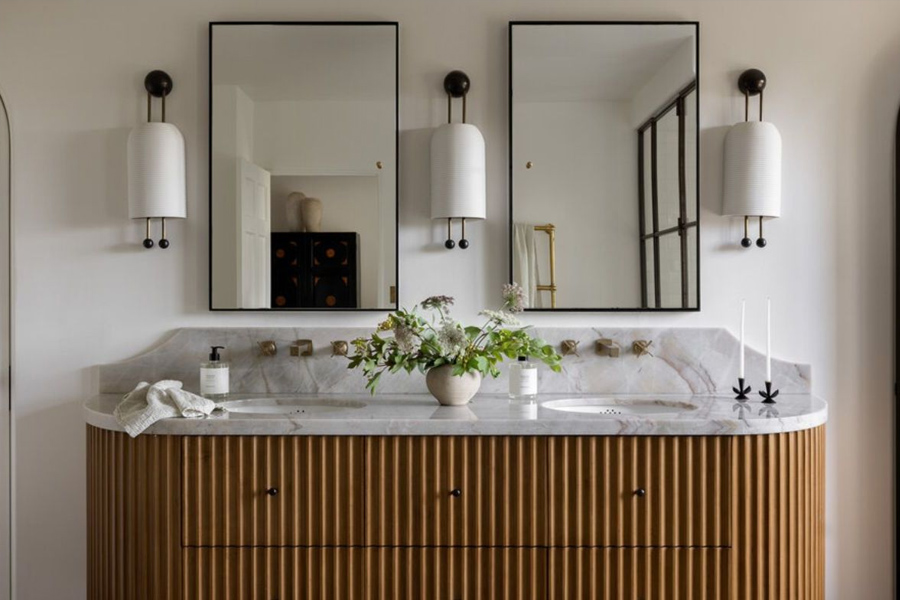
- Introduce a statement detail—fluted drawer fronts, reeded glass, exposed plumbing in a luxe brass, or a floating slab backsplash that feels custom.
Quality First: Materials and Finishes
Bathrooms are humid, splattery environments. The right build saves you from warping, swelling, or chips that appear too soon.
- Look for moisture-resistant plywood or marine-grade plywood boxes; avoid low-quality particleboard near water.
- If you love painted finishes, choose low-VOC, water-resistant lacquer or catalyzed paint that cures hard.
- For counters, quartz and sintered stone deliver durability, stain resistance, and minimal maintenance; porcelain slab is a stealth star for budgets and resilience.
- Natural stone is gorgeous—just seal it regularly and accept patina as part of the romance.
Hardware That Winks
Swapping knobs and pulls is the ten-minute facelift that can change the whole vibe.
- Choose solid metal hardware with a finish that echoes your faucets or lighting but doesn’t need to match perfectly. Mixed metals feel layered when you repeat each finish 2–3 times in the room.
- Try unexpected shapes—arched pulls, textured knurling, or oversized finger pulls on a simple cabinet face.
Color Moves: Paint, Stain, and Tile
Neutrals are calm; color is charisma. Use both strategically.
- Paint a vanity in a saturated hue—ink blue, eucalyptus green, or a moody oxblood—and keep the walls quiet.
- Stain wood to highlight grain (walnut and white oak are timeless) and let a patterned tile backsplash steal the scene.
- For an instant upgrade: a slab-height backsplash carried 10–14 inches up the wall, or full-height tile in a herringbone or vertical stack for fresh energy.
Double Vanities: When Two is Better than One
If square footage allows, a double vanity adds luxury, function, and resale appeal. It also reduces morning traffic jams.
- Aim for at least 60 inches for two sinks; 72 inches gives breathing room.
- If space is tight, a single sink with an extra-wide top might serve better, giving generous counter space for daily gear.
Open Shelving: Air Without the Anxiety
Open shelves lend airiness, but the secret is editing.
- Limit what lives on open shelves to pretty, useful items: rolled towels, lidded jars, a plant that thrives in humidity.
- Use baskets to corral extras and maintain negative space so the shelves feel curated, not crammed.
Mirrors and Lighting: Your Cinematographer’s Kit
Lighting makes or breaks both makeup and mood. Layer it.
- Side sconces at roughly eye level (around 60–66 inches from the floor) give the most flattering, shadow-free light. If space is tight, a backlit mirror or integrated vertical lights works beautifully.
- Choose warm-white bulbs (2700–3000K) with a high color rendering index (CRI 90+) so skin tones look realistic.
- Add a dimmer for spa evenings, and consider toe-kick LEDs under the vanity for a floating glow at night.
Sinks and Faucets: Form Meets Flow
The sink sets tone and function.
- Undermounts are clean and easy to wipe; vessels are sculptural but can splash if the faucet’s too tall or forceful.
- Wall-mounted faucets free up counter space and look custom—just plan rough-ins early.
- Look for WaterSense faucets around 1.2 gpm for efficiency without sacrificing feel.
Plumbing and Power: The Unseen Details
Glamour fades fast if drawers hit pipes or outlets are missing.
- Confirm trap locations before ordering; consider low-profile or bottle traps where visible.
- Place at least one GFCI outlet near the vanity and one hidden inside a drawer or cabinet for charging toothbrushes and shavers.
- In humid bathrooms, ensure strong ventilation to protect finishes—quiet, high-cfm fans make a measurable difference.
Small-Bathroom Tactics That Scale Up Style
A compact room can still deliver star power.
- Float the vanity and continue floor tile beneath to visually expand the footprint.
- Choose a large, tall mirror to bounce light and stretch the wall.
- Keep palette tight: two main tones with one accent, repeated.
- Run the counter slightly deeper on one side for a slim makeup perch or a landing zone for products.
Eco-Smart Choices That Look Luxe
Sustainability and style are happy partners.
- Choose responsibly sourced woods, low-VOC paints, and durable counters that won’t need replacing soon.
- Recycled-content tile or terrazzo reads boutique hotel and keeps waste in check.
- Invest once, maintain lightly, and enjoy for years.
Styling That Feels Effortless
Once the bones are right, accessories do the rest.
- A tray organizes daily essentials; a small vase or sculptural object and a candle add warmth.
- Plush hand towels in a textured weave bring touchable contrast.
- Keep the countertop edited—clutter kills the cinematic vibe.
FAQ
What size vanity works best in a small bathroom?
Look for a 24–36 inch wide vanity with a shallow depth (16–18 inches) and opt for drawers to maximize storage.
Are floating vanities practical?
Yes—wall-hung units visually open the floor, simplify cleaning, and still offer ample storage when paired with deep drawers.
What countertop is most durable for daily use?
Quartz, sintered stone, and porcelain slabs are highly stain-resistant, low-maintenance, and stand up to busy routines.
How high should I hang my vanity mirror and sconces?
Center sconces around eye level (about 60–66 inches from the floor), and hang the mirror so its center is roughly 60–65 inches high.
Can I mix metal finishes in the bathroom?
Absolutely—repeat each finish at least twice (for example, brass faucet + brass pulls, black lighting + black mirror frame) for cohesion.
Do I need a backsplash behind the vanity?
It’s wise; even a 4–6 inch lip protects walls from water, while a taller or full-height backsplash turns protection into a design feature.
What’s better: one large sink or two smaller sinks?
For shared bathrooms, two sinks reduce traffic; in tight rooms, one larger sink with more counter space often functions better.
How do I protect a painted wood vanity from moisture?
Choose a high-quality, water-resistant finish and wipe splashes promptly; add good ventilation to keep humidity in check.
What lighting temperature is best at the vanity?
Aim for warm white, 2700–3000K, with CRI 90+ for flattering, accurate color rendering.
Are vessel sinks still a good idea?
They’re striking, but pair them with the right-height faucet and a gentle flow to minimize splash and keep cleaning simple.