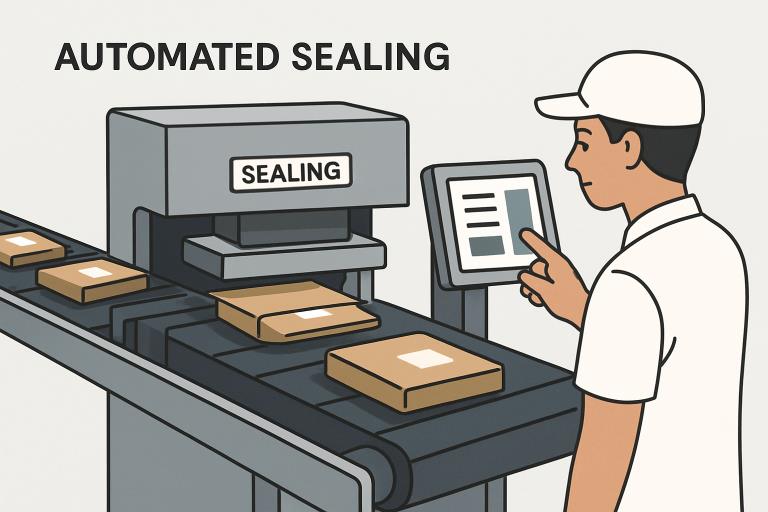
Meeting the demands of modern manufacturing requires ongoing innovation and precision at every stage of production. As manufacturers strive to boost operational efficiency and maintain the highest standards of product quality, the adoption of advanced manufacturing machines, particularly sealing machines, has become a cornerstone strategy. These technologies enable companies to reduce material wastage, increase package uniformity, and streamline complex workflows, all of which are crucial for thriving in today’s highly competitive market. With tightening margins and rising customer expectations, ensuring that products leave the facility in optimal condition is no longer a luxury but a necessity.
Sealing machines are now regarded as essential assets on production floors across diverse industries. Their importance is underscored not only by their role in safeguarding product freshness and extending shelf life, but also by their ability to enhance the integrity and professionalism of packaging significantly. Reliable sealing prevents contamination, spoilage, and tampering, which is particularly important for consumables and sensitive pharmaceuticals. The remarkable evolution of sealing machines from basic manual tools to today’s sophisticated, automated systems is a direct response to the increasing emphasis on efficiency and accuracy within high-volume manufacturing environments. This evolution demonstrates just how pivotal these machines have become—helping companies overcome persistent challenges, meet regulatory standards, and satisfy discerning customers.
The Evolution of Sealing Machines
Sealing machines have undergone remarkable transformations over the last few decades. The earliest models were primarily mechanical and required skilled workers to operate them manually, demanding careful attention to detail and often leading to inconsistencies across production runs. As demands for both scalability and consistency rose, the industry witnessed the introduction of semi-automated machines. These provided greater reliability, reduced the need for intensive manual labor, and began to standardize the sealing process.
Modern sealing systems represent a significant leap forward, as they are fully automated and equipped with intelligent features like real-time monitoring, adaptive controls, and user-friendly touchscreens. Operators can now oversee and modify production lines with unprecedented precision, drastically reducing human error. Rapid advancements in materials science, microprocessors, and sensor technologies have enabled these machines to automatically adapt to changing packaging conditions. For example, they can calibrate their settings on the fly to ensure airtight seals regardless of subtle differences in packaging films or environmental factors. Furthermore, many machines are now equipped with diagnostic features that detect potential problems early, minimizing costly downtime and waste. For a detailed look at how heat sealing technology has evolved, RD World offers an in-depth overview. As automation becomes increasingly widespread, manufacturers are seeing consistent improvements in throughput, operational costs, and product quality.
Key Benefits of Automated Sealing Machines
- Consistency and Quality:Automated sealing systems maintain exceptional uniformity by continuously controlling key process factors, including temperature, pressure, and sealing duration. As a result, products exhibit reliable packaging integrity and appearance, consistently meeting rigorous quality standards required in regulated industries.
- Increased Throughput:Automated machines operate significantly faster than manual or semi-automated systems. This higher output rate enables manufacturers to efficiently scale their operations to meet growing demand while maintaining, or even improving, product quality.
- Labor Optimization:By automating repetitive, potentially strenuous sealing tasks, these machines enable businesses to optimize labor allocation. Employees can be redirected to higher-value responsibilities, such as quality control, equipment management, or continuous improvement initiatives, thereby amplifying overall productivity and job satisfaction.
- Enhanced Safety:The automation of sealing processes mitigates the risks associated with repetitive strain injuries and reduces the likelihood of workplace accidents. This promotes a safer work environment and ensures compliance with occupational health and safety standards.
Technological Innovations in Sealing Machines
Technological innovation remains a driving force behind the progress of sealing machines. One major leap has been the integration of artificial intelligence (AI), which enables systems to adapt their settings in real-time to accommodate different packaging materials, thicknesses, and even product types. AI-powered diagnostics can proactively identify seal quality issues, facilitating predictive maintenance and reducing the likelihood of costly production stoppages. Furthermore, sophisticated sensors embedded within modern machines deliver real-time production data, helping managers optimize throughput and minimize downtime.
Energy efficiency is another pivotal focus area in the latest generation of sealing equipment. Features such as high-efficiency servo motors, automated lubrication systems, and low-waste operational designs not only lower energy costs but also advance a manufacturer’s sustainability goals. The ability to automatically detect and correct anomalies further enhances line efficiency by minimizing waste and ensuring that only properly sealed packages are moved along the production chain.
Industry Applications
Automated sealing machines are versatile solutions with widespread adoption across an array of industries, each of which has unique needs and regulatory standards:
- Food & Beverage:In this sector, sealing machines play a vital role in extending shelf life, ensuring safety, and maintaining product quality. They create tamper-evident and leak-proof packaging that effectively preserves freshness from the factory to the consumer’s table. Their reliability is crucial for compliance with food safety regulations, while their efficiency helps manufacturers respond quickly to changing consumer tastes.
- Pharmaceuticals:The pharmaceutical industry relies heavily on sealing machines to deliver sterile, consistent packaging that meets strict regulatory requirements. Precise sealing prevents contamination, maintains dosage integrity, and protects sensitive medications from external factors such as light and moisture, ensuring patient safety and product efficacy.
- Logistics:In logistics and distribution, sealing machines help prevent tampering and package damage during transport, thus protecting both the merchandise and the company’s reputation. By ensuring that every parcel is securely sealed, these machines support the efficient, secure, and seamless storage and delivery of goods—critical in an era of expanding e-commerce and global supply chains.
Maintenance and Training for Optimal Performance
Regular, proactive maintenance is essential for extending the lifespan and optimizing the efficiency of sealing machines. Preventive maintenance tasks may include routine cleaning of machine components, timely replacement of wear parts, and the use of real-time diagnostics software to detect early signs of mechanical trouble. By addressing maintenance needs preemptively, companies can avoid unscheduled downtime and costly repairs. Just as important is investing in well-structured operator training programs that empower production teams to safely operate equipment, understand advanced machine features, and respond quickly to alerts or errors. This dual emphasis on maintenance and training is fundamental for leveraging the full range of capabilities offered by modern sealing technology.
The importance of ongoing workforce upskilling in advanced manufacturing settings cannot be overstated. As automation becomes more complex, the need for skilled operators, technicians, and engineers grows correspondingly. Employees who understand how to troubleshoot and optimize modern machinery can prevent minor issues from escalating and help drive continuous improvement.
Future Trends in Sealing Technology
The future of sealing technology is being shaped by emerging innovations aimed at building fully integrated, intelligent manufacturing ecosystems. One trend on the horizon is the increasing adoption of IoT-enabled sealing machines, which promise seamless connectivity with other equipment and centralized monitoring systems. This connectivity enables live data collection, remote troubleshooting, and highly adaptive, data-driven decision-making. Machine learning algorithms are expected to play an ever-larger role, supporting not only adaptive production processes that self-optimize for maximum efficiency but also predictive maintenance protocols that anticipate points of failure before they occur. Such advancements will drive even higher productivity and reliability while lowering energy consumption and material waste—critical considerations as manufacturers strive to improve environmental sustainability and compliance.
Conclusion
The integration of advanced sealing machines into modern manufacturing operations represents a pivotal step for companies dedicated to excelling in efficiency, product quality, and sustainable practices. As technology continues to advance, these machines will only grow in strategic importance, empowering businesses to respond effectively to emerging challenges and capitalize on new opportunities within a rapidly evolving industrial landscape. The ongoing development and deployment of these technologies offer a promising outlook for high-performance, resilient, and competitive manufacturing worldwide.