Why Wedding Jewellery Speaks Louder Than Words
Bridal jewellery is a visual language, not just a sparkle. Metals, gemstones, motifs, and scale symbolise ancestry, faith, and community, converting a bride into a living archive who revives ancient art. Gold symbolises affluence and purity, pearls grace and preemptive tears, red stones vitality, and circles eternity. In this global, mix-and-match world, couples still like things that feel like blessings to hold—beautiful objects that anchor tradition while expressing modern personality.
India: Gold as Blessing, Craft as Legacy
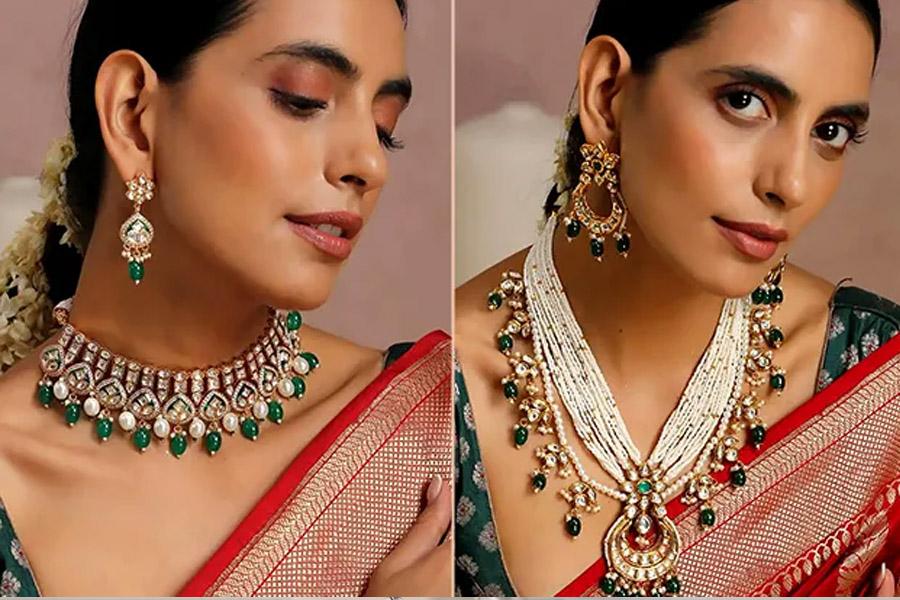
Indian bridal adornment is a cinematic sweep of gold, color, and craftsmanship, with regional styles that read like chapters in a vast epic. In the south, temple jewellery echoes sanctuaries—lush gold forms set with rubies, emeralds, and pearls, from long harams to maang tikkas and waist belts. In the north, Kundan and Polki bring uncut stones alive in handcrafted gold, often paired with Meenakari enamel so the reverse is as mesmerizing as the front. Maharashtra’s Kolhapuri Saaj, crowned by its crescent pendant and pearl fringe, balances bold statement and quiet symbolism.
Gold symbolises Lakshmi’s wealth, fertility, and luck. Families treasure these sets as sacred adornment and movable wealth, investing love and stability. Modern brides choose one stunning necklace over three, a nose ring that pictures well, and dance-floor-moving bangles. The grandeur is trimmed for comfort and rewearability.
Middle East: High-Karat Splendor and Family Security
In the Middle East, bridal gold is confident and sunny. 22K and 24K pieces emphasise metal purity and intention. Consider wrist-to-elbow piled bangles, coin-laden necklaces, and arabesque filigree belts that define a heritage silhouette. Gold is ceremony and savings, a brilliant heritage with lasting value.
Contemporary styles combine inherited gold with diamonds or grandmother’s bracelet with a modern collar. Ancient workmanship meets modern style in a bridge. Gifting gold cash or jewels to the bride turns individual shine into community blessing.
East Asia: Symbolic Elegance, Quiet Power
In East Asia, meaning often outshines scale. Chinese bridal pieces lean on auspicious code: dragons and phoenixes twine masculine and feminine energies, promising harmony. High-karat gold sets appear at tea ceremonies, ritually gifted by elders, binding prosperity to lineage. Japanese aesthetics favor restraint—pearls for purity and poise, a luminous whisper against silk. Korean hanbok comes alive with norigae pendants, talismanic charms suspended from intricate knots, offering luck and protection with every sway.
Today, brides happily weave Western sparkle into these traditions. A diamond engagement ring sits alongside tea-ceremony gold; pearl studs tuck elegantly under a ceremonial headdress. It’s the choreography of modern identity—versatile, respectful, and deeply personal.
Africa: Beads, Coral, Shells—Heritage in Full Color
African bridal jewelery boldly proclaims heritage. Gold symbolises riches, bronze history, glass and wooden beads land-based workmanship, and cowrie shells richness and fertility. Edo and Yoruba brides wear red-orange coral bead collars, crowns, and cuffs to honour ancestors and family prestige. Maasai beading in Kenya uses colour and pattern to indicate age, marital status, and allegiance.
Visibility is power here. Scale and saturation announce communal support and confidence. Designers across the continent remix old techniques with new silhouettes, letting brides pair ancestral beadwork with sculptural metal, and carry the continent’s palette into global fashion conversations.
Europe: Tiaras, Filigree, and the Romance of Heirlooms
European bridal jewellery values understatement and history. Diamond-decorated tiaras are passed down like vows in the UK. French Art Deco still captivates with geometric serenity, clean lines, and diamonds that compliment fashion. Italy’s filigree converts gold into airy, delicate lace, proving that workmanship can make precious metal breathe.
Meaning and sustainability guide current decisions. Vintage items and family heirlooms are revived, sometimes with stones changed. European ateliers draw influence from Indian enamel or Middle Eastern geometry, while brides find designers in global cities like Singapore who combine heritage techniques with simple forms.
The Americas: Individuality, Ethics, and Fusion
In North America, the focus often centers on the ring set—engagement solitaire, wedding band—though wedding-day jewels are increasingly personal and eclectic. Alternative gems (sapphires, emeralds, spinels), unique cuts, and lab-grown stones speak to individuality and ethics. Heirlooms make touching cameos: grandmother’s pearls, a mother’s bracelet, a locket with a tiny portrait tucked near the heart.
South America celebrates colour and spirituality with emerald greens, ruby reds, gold saint medals, and Indigenous artisan patterns. Indian gold on a white gown, African beading overlaid with minimalist diamonds, East Asian hairpieces above modern veils—multicultural weddings are joyful. Lovingly woven numerous identities are celebrated.
The Modern Global Bride: Tech, Custom, and Cross-Cultural Flair
The bridal jewellery industry is creative and connected. 3D printing creates architectural shapes, modular designs may be used for ceremony and reception, and customisation brings brides into the studio for collaboration. Digital platforms allow ateliers and craftspeople to design Polki sets, filigree cuffs, and pearl-bowed headpieces for couples across time zones.
Global hubs are appealing. Couples buying gold jewellery in Singapore or other design-forward cities often visit foreign craftsmanship and heritage-rich boutiques. It touches live tradition—pieces that feel ageless yet fitted, anchored yet modern—so day one jewellery becomes an inheritance for day one thousand.
FAQ
What does high-karat gold signify in bridal jewellery?
Higher karat gold signals purity of metal and, culturally, purity of intention and blessing. It’s prized in regions where ceremonial value and long-term investment intertwine.
Can I mix jewellery traditions from different cultures?
Yes—modern brides often blend motifs, materials, and heirlooms to honor multiple heritages and express personal style. The key is respectful integration that keeps meaning front and center.
Why are pearls popular in Japanese bridal looks?
Pearls symbolize purity, grace, and emotional balance in Japanese aesthetics. Their quiet shimmer complements ceremonial dress without overpowering it.
What are Kundan and Polki in Indian jewellery?
Kundan uses refined gold to set gemstones, while Polki showcases uncut diamonds for a regal, antique glow. Both are handcrafted techniques tied to North Indian traditions.
What is the significance of coral beads in Nigerian weddings?
Coral bead regalia honors ancestry, status, and communal pride, especially in Edo and Yoruba ceremonies. The vivid hue creates a powerful, celebratory presence.
Are lab-grown diamonds suitable for bridal jewellery?
Absolutely—lab-grown diamonds offer sparkle with a lighter environmental and ethical footprint. Many couples choose them for value and transparency.
What is a norigae in Korean bridal dress?
Norigae is a decorative pendant hung from a hanbok, combining knotwork with symbolic charms for luck, protection, and beauty. It functions like jewellery with talismanic meaning.
Is Singapore a good place to shop for gold bridal jewellery?
Yes—Singapore is known for skilled craftsmanship, diverse design influences, and high-quality gold. Brides often seek pieces there that balance tradition with contemporary aesthetics.