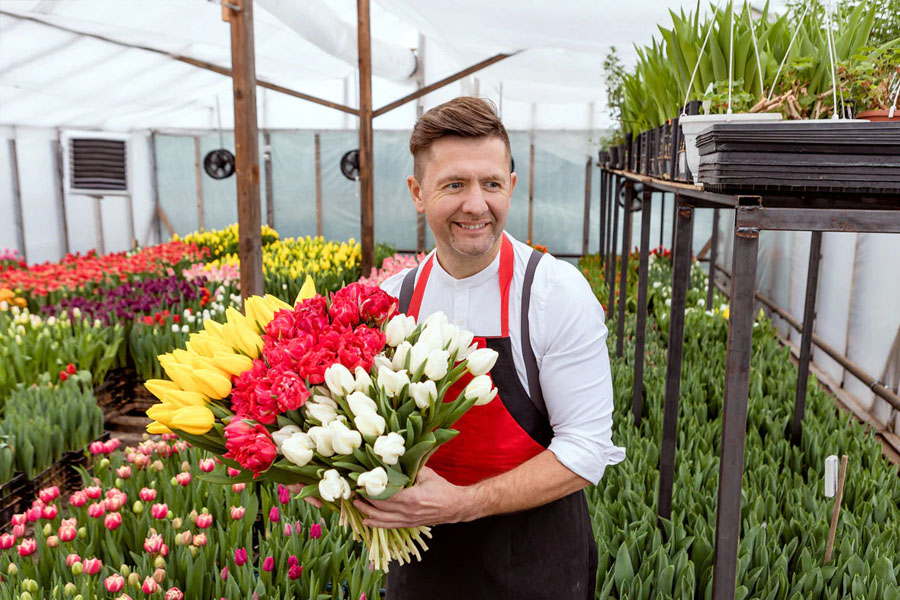
What Farm-Direct Really Delivers
Imagine the first van doors opening at dawn: clean stems, tight heads, real colour. Farm-direct promises a shorter field-to-studio link that protects vitality and helps you plan without uncertainty. When product goes from field to temperature-controlled hub to your hands, timing, shrink, and big weeks stop being random.
Farm-direct is about system design, not romance. Fewer touchpoints, tighter handoffs, and cold chain integrity extend vase life and grade consistency. Spec, execute, and repeat for weddings, corporate installs, and retail rotations without rewriting midweek.
Signals of a Reliable Wholesaler
Good partners are visible and responsive. You should see real-time availability, a shipping calendar you can trust, and service-level promises that don’t evaporate during peak season. Clear rules for substitutions — by tone, texture, shape, and budget — prevent last-minute compromises from changing your palette or design language.
Reliability also looks like communication that outruns problems. If your supplier flags weather or customs delays early, and suggests viable alternatives across the same tonal family, you keep the design intact and the schedule intact.
Grading, Quality, and Smart Substitutions
Grading is the backbone of consistency. Every farm has its own approach, but your wholesaler should translate that into a simple standard: stem length range, bud size, petal density, head count per bunch, and maturity on arrival. You’re not buying “roses”; you’re buying 60 cm, firm heads, mid-stage cut, no bruising — and that clarity matters.
Request matches that match the mood and structure when substituting. Swap colour families and forms: pink garden rose to blush peony in shoulder season, ruffly carnation to ranunculus for texture, Cappuccino rose to quicksand-toned spray for scale. First protect silhouette and palette, then cost.
Pricing That Protects Your Margin
Good pricing is simple enough to do in your head. Look for per-stem or per-box clarity, transparent minimums, and no hidden fees tucked into “handling.” Mix-box options are gold for smaller studios or test runs, and seasonal leads help you forecast costs across peak weeks.
Work with basic sets organized by “background + texture + hero.” Your background builds volume without chewing margin; texture adds interest at medium price points; heroes deliver the wow where it counts. When your costing structure mirrors this trio, you scale faster and negotiate with confidence.
Logistics, Cut-Offs, and the Cold Chain
Logistics is your peace engine. You want cut-off times you can plan around, carriers that handle perishables, and cold chain support with track-and-trace you actually check. Ideal temp ranges matter: most cut flowers ride best around 34–38°F, with humidity that keeps petals plump without condensation.
If your partner communicates delays before you notice them, and keeps a reserve of alternatives that match your spec, you avoid pulling clients into the chaos. Set your week around ship days and drop times, then build your labor schedule to land assembly and installation without bottlenecks.
Stocking Florist Supplies Without the Runaround
Momentum matters. Wire, waterproof tape, grids, chicken wire, eco-friendly mechanics, and adhesives in the same order save hours of prep. Less errands equals more time for conditioning, moisturising, styling, and content capture for next week’s bookings.
Ask for staples you always burn through, plus seasonal specialty items for event builds. Your partner should keep core supplies reliably in stock, so you don’t scramble for basics when the clock’s loud.
A Quick Partner Checklist
- Transparent price list and clean minimums
- Real shipping calendar with reliable SLAs
- Grading standards you can hand to your team
- Substitution rules by tone, shape, and budget
- Fast support during peak weeks and holidays
- Ability to combine flowers and florist supplies in one cart
- Seasonal availability calendar and care guidance
- Options for farm-direct and mix boxes, clearly labeled
Seasonal Planning for Consistent Looks
Seasonality influences aesthetics and economy. In hot weather, use waxy petals and robust stems; in cool weather, delicate faces. Plan peaks six to eight weeks out, lock heroes early, and provide flexible lines for texture and filler to adjust to market changes.
Summertime varieties should love the sun and withstand transportation. In winter, choose delicate blossoms that thrive indoors. The goal is a consistent visual language that endures climate and supply, so the client’s mood board complements their venue.
Where Petaljet Fits
For studios that live on deadlines and volume, Petaljet leans into the fundamentals: farm-direct options, stable schedules, and brisk communication right when you need it. You’ll find clear grading, mix-box flexibility, and the ability to load florist supplies alongside stems, so bulk orders move from pricing to delivery without friction.
When reliability solves half your creative equation, you free up space for design, storytelling, and client experience. That’s the sweet spot: fewer surprises, more moments where the room comes alive and the install feels effortless.
FAQ
What does “farm-direct” mean for florists?
Product moves from farm to a controlled hub and straight to you, reducing touchpoints and preserving quality. It boosts predictability, vase life, and grading consistency.
How should substitutions be handled?
Ask for swaps that honor tone, texture, shape, and budget so your design language stays intact. Keep heroes pure and flex background or texture elements first.
What grading details matter most?
Stem length, bud diameter, petal density, cut stage, and bunch counts should be explicit. These standards keep your designs consistent across orders.
Are mix boxes worth it for smaller studios?
Yes — they let you test varieties, manage cash flow, and build balanced palettes without committing to full single-variety cases. They’re also great for seasonal shifts.
What’s a realistic shipping cut-off?
Common cut-offs are midday to early afternoon for next-day processing, but confirm your market’s schedule. Build your labor plan around those windows.
What temperatures support the cold chain?
Most cut flowers prefer roughly 34–38°F with stable humidity. Consistency matters more than perfection if handling times are short.
How do I protect margins in peak weeks?
Lock heroes early, use durable background flowers, and price by “background + texture + hero” groups. Keep options for substitutions that don’t change your look.
Should I order florist supplies from the same partner?
Yes — consolidating supplies with stems saves time, reduces risk, and strengthens your prep rhythm. It also simplifies inventory tracking.