Setting the Mood Above the Line of Sight
In retail, we agonize over windows, fixtures, and merchandising. Yet the ceiling—the quiet fifth wall—sets the emotional tone before the first display ever speaks. High, airy volumes loosen the shoulders and slow the pulse, inviting shoppers to wander. Lower, compressed planes pull focus, creating intimacy that’s perfect for jewelry counters, boutique corners, and fitting areas. Done well, you can even stage “compress and release” moments: a tighter ceiling over entry thresholds that open into tall, light-filled rooms, delivering a small cinematic reveal and a sense of arrival.
Ceiling colour and texture communicate secretly. Moody tones ground a space and reduce visual noise, highlighting merchandise. Light-reflecting pale finishes create a floating serenity. With texture—wood slats for warmth, plaster for craft, metal for precision—you can tell a brand story without signs. The atmosphere overhead affects shoppers’ pace, comfort, and dwell duration without their looking up.
Light as a Guide, Not Just a Glow
Ceiling lighting is dance and visibility. Warm light welcomes, but colder tones emphasise modern, tech-forward vibes. Layer ambient, accent, and task lighting for comfort, drama, and clarity at counters and mirrors. Track heads make zones adaptable, recessed fixtures streamline sightlines, and pendants provide flair and intimacy to cash wraps, sampling bars, and reading nooks.
Use light to lead. A gentle path of brighter pools can pull customers toward new arrivals, seasonal edits, or the back-of-store hero wall. Wall-washing calms aisles; tight beams create sparkle on glass, metals, and gems. Mind glare and color rendering—what flatters skin tones, food, and fabrics isn’t always the same. When the ceiling does the guiding, shoppers follow the glow and discover exactly what you want them to see next.
Forms, Layers, and Materials That Do the Heavy Lifting
A ceiling doesn’t need to be flat to be fabulous. Coffers add quiet rhythm. Baffles and clouds float like sculpture while hiding ductwork and sprinklers. Curves soften hard retail boxes; layered planes create zones without a single partition. These moves add depth, help with acoustics, and allow for invisible infrastructure—HVAC, wiring, and controls—to slip in gracefully.
Material choice affects room tone and feel. Heat and humanity come from wood. Metallic perforation looks sleek and engineered. To prevent aisle talks, fabric and acoustic felt reduce reverberation. A tranquil soundscape encourages visitors to stay and spend. Mixing materials like timber slats with black steel trims or limestone plaster with silent LEDs shows ingenuity while making maintenance easy.
Brand Storytelling Overhead
The ceiling is a brand ambassador. A tech retailer might run an almost invisible plane of white with crisp, shadow-free light—precision first. A wellness brand could celebrate natural woods, skylights, and soft profiles that suggest ease and transparency. Value-oriented stores may lean into simple grids and exposed utilities to telegraph honesty and affordability.
Flagship spaces often include Instagram-worthy ceilings with sculptural fittings or bold geometry. Balance is key: the ceiling should enhance the brand without overshadowing the product. When floor, walls, fixtures, and ceiling match, the room speaks as one voice and clients sense the tale.
Real-World Moves: What Retailers Are Doing
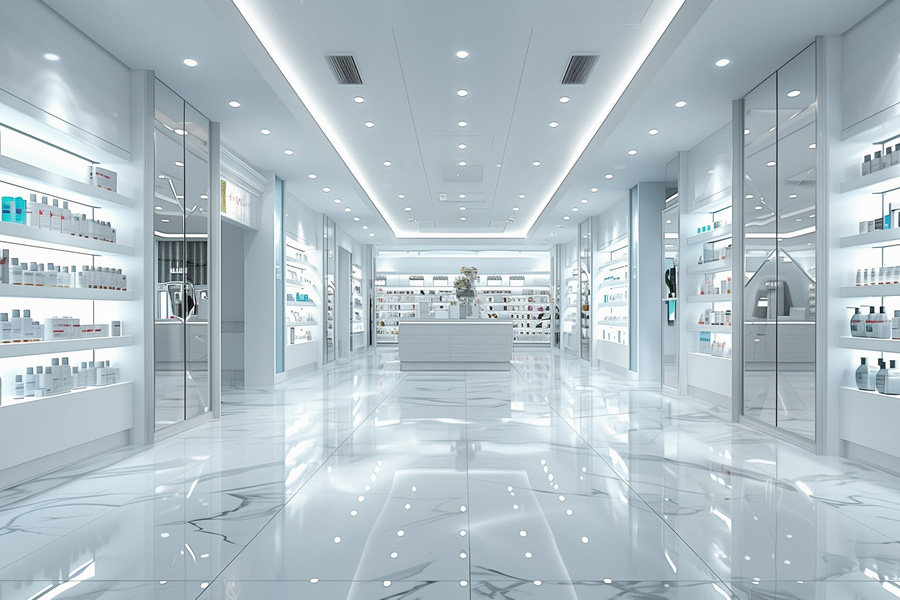
Luxury jewellers favour mirrored or high-gloss ceilings because they magnify dazzle, turning little beams into a galaxy. Cafes show ducts and beams for industrial honesty that complements community and craft. Acoustic tile and integrated lighting enable calm, easy navigation, and label and colour visibility in grocery chains.
With clean ceilings and bright, minimum lighting, fast-fashion venues maintain speed. Tech flagships are transparent and innovative, with glass and timber structures. Boutiques utilise lower ceiling clouds over lounges for quiet chats. Pop-ups use modular truss and fabric systems to easily lift and stow brands. Ceilings perform a discreet but vital role across pricing points and genres.
Sustainable Choices That Also Save
Smart businesses use green ceilings, not trends. Skylights and solar tubes save electricity and offer a natural, feel-good atmosphere. High-efficiency LEDs with dimming, occupancy, and daylight sensors save money and provide steady illumination. Recycled acoustic panels, bamboo, and recycled wood signal sustainability and offer texture.
Low-VOC coatings and easy-to-service systems reduce staff and budget maintenance. Demountable clouds and tracks reduce waste during seasonal refreshes, layout flips, and code changes. Sustainable practices are seen in the atmosphere and profits.
Budget, Phasing, and Practical Constraints
You don’t have to overhaul a ceiling to change a mood. A fresh color, tuned lighting, and a few well-placed clouds can transform experience quickly. For bigger ambitions, phase projects: start with lighting controls and acoustic improvements, then add sculptural elements later. Always plan around fire sprinklers, detectors, egress signage, and access to mechanical systems; beauty should never fight safety.
Maintenance from the start. Spec easy-to-clean finishes, fixtures with accessible drivers, and modular components that swap without store shutdown. Flexibility isn’t simply a bonus—it’s the difference between a long-lasting ceiling and one that inhibits brand growth.
FAQ
Do high ceilings always make a store feel better?
No. High ceilings create openness, but lower ceilings can drive focus and intimacy; the best choice depends on your brand and the experience you want.
Can lighting alone change how customers move?
Yes. Layered, directional lighting can subtly guide people through zones without signs, shaping paths and points of pause.
Are mirrored ceilings practical outside luxury?
They can be, but use with restraint; mirrors magnify light and activity, so they’re best for highlight areas, not entire sales floors.
Will acoustic panels ruin my aesthetic?
Not if you choose the right form and finish; baffles, felt clouds, and perforated materials can be both sculptural and sound-absorbing.
Is daylighting worth the investment?
Often, yes. Skylights or solar tubes reduce energy costs and add a natural quality that improves mood and product perception.
How do I keep the ceiling from stealing attention?
Balance expressive elements with clean planes and focused lighting so the product remains the hero and the ceiling plays support.
Can I upgrade a ceiling without closing the store?
Typically. Phased work with modular components and nighttime installs can refresh lighting and clouds with minimal disruption.
Do warmer lights always sell more?
Not always. Warm light creates welcome, while cooler light sharpens detail; choose based on product type and brand tone.
What if my building has exposed utilities I can’t move?
Embrace them. Paint, organize, and light them cleanly; an honest industrial look can read intentional and on-brand.
How often should I refresh the ceiling?
Plan minor updates every 2–3 years—tune lighting, add clouds or finishes—so the space stays current without major overhauls.