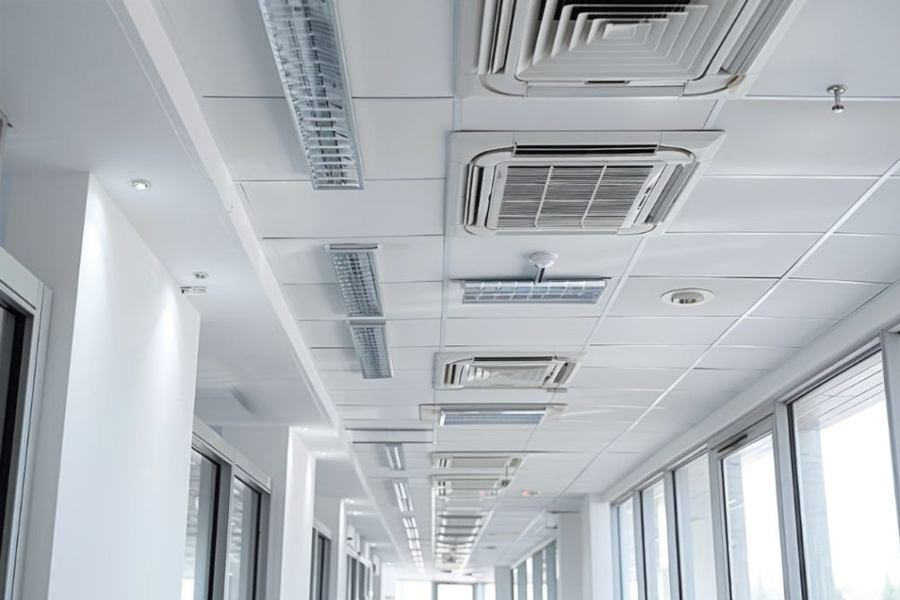
Why Ventilation Matters in Dubai’s Climate
Dubai dazzles with glass towers and ocean views, but its air tells a more complex story—sun-baked dust, salt-laced breezes from the Gulf, and months of intense heat that keep windows sealed. In that reality, a good ventilation system isn’t a luxury; it’s the quiet backbone of comfort, health, and energy efficiency. The goal is simple but ambitious: bring in fresh air, keep out pollutants and sand, and do it without inflating cooling bills.
What Ventilation Actually Does
Ventilation is the controlled exchange of indoor and outdoor air. It dilutes indoor pollutants, manages humidity, and maintains pressure balance so your space feels crisp rather than stuffy. In Dubai, ventilation almost always integrates with cooling—balancing thermal comfort with air quality becomes a daily choreography of airflow, filtration, and energy recovery.
Indoor Air Quality: Filtering Dust, Sand, and Everyday Pollutants
Indoor emissions come from building materials, furnishings, cooking, and cleaning. With desert dust and construction, filtering shines. Effective systems use external air intakes with pre-filters or sand traps to catch larger particles and higher-efficiency filters to catch small dust and allergens. HEPA or electrostatic solutions and UV-C duct disinfection minimise microbial burdens in sensitive spaces. Match filter efficiency to fan capacity to avoid pressure drop and airflow obstruction.
Energy Efficiency: Fresh Air Without the Penalty
Pulling hot, humid air into a chilled building sounds expensive—because it is, unless you recover the energy you’ve already paid for. That’s where heat and energy recovery devices shine. Heat Recovery Ventilators (HRVs) transfer sensible heat; Energy Recovery Ventilators (ERVs) do that and also move moisture, which is gold in humid months. In Dubai’s climate, ERVs typically outperform HRVs by reducing both cooling and dehumidification loads. Pair them with variable-speed fans, airtight ductwork, and demand-controlled ventilation (which modulates fresh air based on occupancy or CO2 levels), and you can cut ventilation-related energy use significantly while keeping air quality consistent.
Humidity Control That Keeps Mold at Bay
Dubai isn’t just hot; it can be seasonally humid, especially near the coast. Without disciplined humidity management, you invite condensation, musty odors, and mold. Advanced systems use ERVs, dedicated dehumidification, and smart controls to keep indoor relative humidity in the 40–60% sweet spot. Kitchens and bathrooms need robust extraction with adequate make-up air so moisture doesn’t migrate to cool surfaces and condense.
Comfort and Productivity: The Cognitive Boost of Clean Air
Better air doesn’t just feel good—it helps people think better. Offices with balanced ventilation, low CO2, and minimal particulates support sharper focus, fewer headaches, and reduced sick days. For homeowners, that same clarity translates into deeper sleep and fewer allergy flare-ups. Comfort starts with temperature, but it lives in the details: quieter fans, steady airflow without drafts, and a subtle sense that the space just “breathes” well.
Tailored Solutions for Dubai’s Diverse Buildings
Dubai’s skyline and neighborhoods are a mosaic—each with its own airflow puzzle.
- High-rise apartments and offices: Balanced ventilation with ERVs, stairwell pressurization for fire safety, corridor make-up air, and quiet, well-lined ducts to curb noise.
- Villas and townhouses: Centralized ERVs or decentralized wall units in retrofits; strategic placement of intakes away from dust and exhaust sources; dedicated kitchen and bath extraction.
- Retail and hospitality: Demand-controlled ventilation that tracks occupancy swings; air curtains at entrances to block hot, humid air; back-of-house exhaust tuned to avoid negative pressure.
- Parking structures: CO sensors linked to jet fans, ensuring air quality without running fans at full tilt all day.
- Industrial and mixed-use: Zoned systems that separate clean and process areas; specialized filtration for workshops or kitchens; pressure cascades to stop odors and emissions from drifting.
System Types and Technologies Worth Knowing
Balanced mechanical ventilation is the baseline, but the components matter:
- ERVs/HRVs: Place the energy recovery core where it’s accessible for cleaning; ensure condensate drains are correctly trapped and insulated.
- Filtration: Pre-filters for larger particles and high-efficiency filters for fine particulates; change schedules accelerate during sandstorms and peak construction.
- Controls: CO2 and VOC sensors fine-tune outdoor air; humidity sensors prevent over-drying or dampness; zoning and occupancy sensors reduce waste.
- Ductwork: Airtight sealing, proper insulation, and acoustic lining make a dramatic difference in performance and comfort.
- Intake placement: High and clean, away from traffic, exhausts, and cooling towers; consider sand traps and bird screens to protect coils and filters.
Design and Compliance: Balancing Fresh Air and Practical Limits
The finest designs minimise outdoor air rates per person and floor space while accommodating Dubai’s temperature variations. Fresh air is deeply dispersed within the occupied zone, not only thrown into a hallway. Supply and return are adjusted to avoid pressure issues—negative pressure draws hot, dusty air in; positive pressure keeps impurities out. New buildings require architect, MEP engineer, and contractor collaboration to protect duct pathways, equipment clearances, and maintenance access. Commissioning and testing-and-balancing ensure airflow meets design for all projects.
Retrofits: Breathing New Life Into Existing Spaces
Older flats and villas can achieve good ventilation without rebuilding. Air quality can be improved by slim ducted ERVs above ceilings, through-wall ERVs in select rooms, or smart window ventilators with filtration Fix gaps, line door sweeps, and insulate leaky ducts to bring in deliberate, filtered, and tempered fresh air.
Operations and Maintenance: The Unseen Work That Keeps Air Clean
Dusty environments require strategic maintenance. Seasonal dusty conditions may change quarterly filter schedules to monthly. Blocking ERV cores increases energy and decreases ventilation efficiency. Simple dashboards measure fan power, filter difference pressure, and indoor CO2/PM2.5/humidity. When statistics drift, you spot problems before residents do.
Common Pitfalls To Avoid
- Oversizing AC instead of adding proper ventilation and energy recovery, which wastes energy and leaves air stale.
- Selecting ultra-high-efficiency filters without resizing fans, resulting in low airflow and poor distribution.
- Placing intakes near exhausts, loading docks, or busy roads—essentially piping pollutants indoors.
- Skipping balancing and commissioning, then wondering why one room freezes while another is stuffy.
- Running exhaust without make-up air, causing negative pressure that pulls dust and hot air through every crack.
Cost, Value, and the Long Game
Upfront, energy recovery and smart controls cost more than a basic exhaust fan. Over the life of a system, they typically pay back through lower cooling and dehumidification loads, reduced absenteeism, and fewer maintenance headaches. The real return shows up in quieter rooms, clearer heads, and spaces that stay fresh even with the doors closed for months.
FAQ
Is ventilation the same as air conditioning?
No—ventilation brings in and conditions fresh outdoor air; air conditioning primarily recirculates and cools indoor air.
Should I choose an ERV or an HRV in Dubai?
An ERV is usually better because it transfers both heat and moisture, reducing dehumidification loads in humid months.
How often should filters be changed in a dusty climate?
Check monthly and replace as needed; during sandstorms or construction nearby, expect more frequent changes.
Can ventilation help with allergies?
Yes, with proper filtration and balanced airflow, ventilation reduces dust, pollen, and indoor irritants that trigger symptoms.
Do open windows work for fresh air in Dubai?
They can, but in hot, dusty, or humid conditions you’ll trade comfort and cleanliness; mechanical ventilation filters and tempers the air.
Is mechanical ventilation noisy?
It shouldn’t be; right-sized fans, acoustic duct lining, and proper balancing keep systems whisper-quiet.
What is demand-controlled ventilation?
It’s a system that adjusts fresh air based on real-time signals like CO2 or occupancy, delivering air when needed and saving energy when it’s not.